Outstanding, Grateful Insights Now: Famous Rishi Names
Discover the ultimate list of famous rishi names. Explore rare legends, their stories, and meanings. Perfect for happy seekers of spiritual wisdom!

Written by By Hanish Bagga
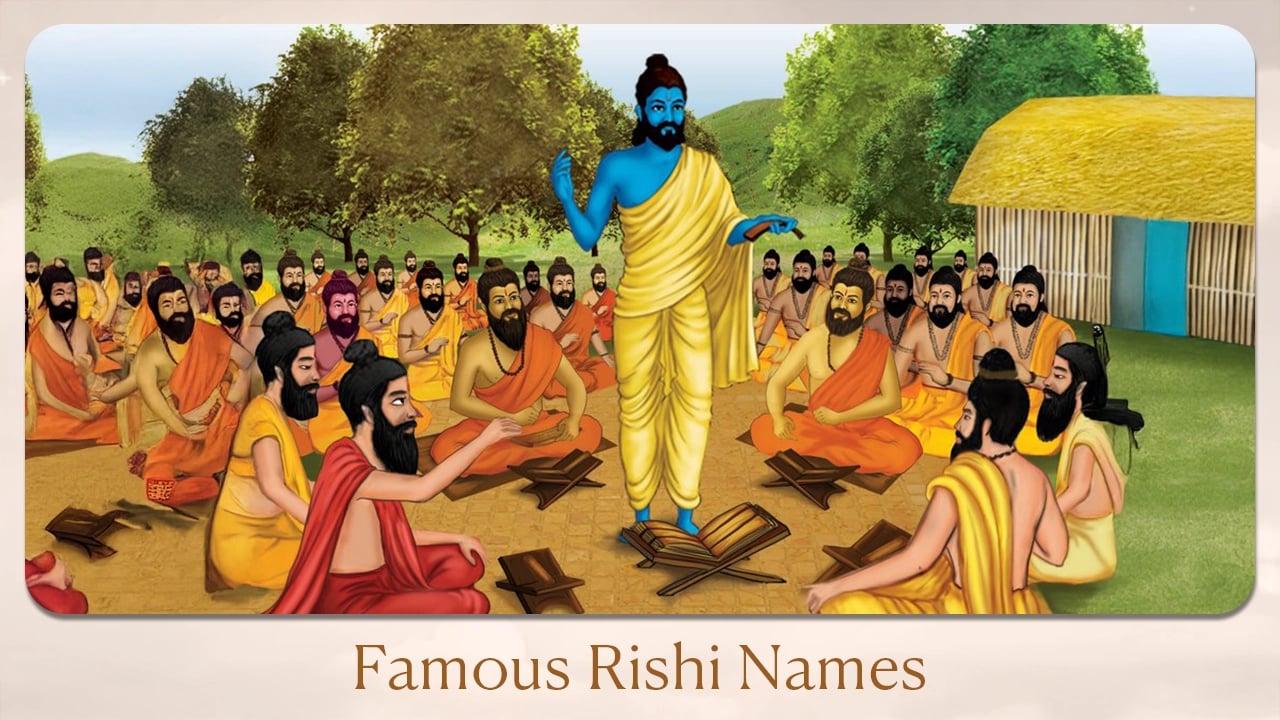
Famous Rishi Names
Have you ever wondered about the legendary sages who shaped the spiritual and philosophical landscape of ancient India? These remarkable individuals, known as Rishis, are more than just historical figures—they are the torchbearers of wisdom, the architects of sacred knowledge, and the guiding lights for generations. In this article, we’ll dive deep into the world of Rishis, exploring their significance, their stories, and, most importantly, the famous Rishi names in English that continue to inspire us today.
Read Also: Understanding Angel Number 0808: Meaning, Abundance Spiritual Guidance
Who Are Rishis?
The Meaning of ‘Rishi’
The word ‘Rishi’ comes from the Sanskrit root “ṛṣ,” which means “to see” or “to know.” Rishis are often described as seers—those who have seen the truth and gained profound spiritual insight. They are revered for their ability to perceive the mysteries of the universe and articulate them in the form of hymns, mantras, and teachings. Among them, the Famous Rishi Names are remembered for their lasting contributions to Hindu philosophy and spirituality.
Rishis in Ancient Texts
Rishis are central figures in ancient Indian scriptures, especially the Vedas and Upanishads. They are credited with composing the hymns of the Rigveda, the oldest known scripture in the world. Their wisdom forms the backbone of Hindu philosophy and spirituality.

The Significance of Rishis in Indian Culture
Spiritual Guides and Teachers
Rishis are not just scholars; they are spiritual guides who lead seekers on the path to enlightenment. Their teachings emphasize self-realization, compassion, and the pursuit of truth. In many ways, they are the original life coaches, helping people navigate the complexities of existence.
Contributors to Knowledge and Wisdom
From astronomy to medicine, Rishis have contributed to various fields of knowledge. Their insights laid the foundation for Ayurveda, Yoga, and even early mathematics. Their curiosity and quest for understanding have left an indelible mark on human civilization.
Famous Rishi Names in English
Let’s get to know some of the most celebrated Rishis whose names have become synonymous with wisdom and enlightenment.
Rishi Vishwamitra
Vishwamitra is one of the most renowned Rishis, known for his transformation from a king to a sage. He is credited with composing the Gayatri Mantra, one of the most powerful and revered mantras in Hinduism. His journey is a testament to the power of determination and spiritual growth.
Rishi Vashistha
Vashistha is often depicted as the royal sage and the family priest of the Ikshvaku dynasty. He is known for his wisdom, patience, and his role in many ancient stories, including the Ramayana. Vashistha’s teachings emphasize the importance of balance and harmony in life.
Rishi Agastya
Agastya is celebrated for his immense knowledge and his role in spreading Vedic wisdom to South India. He is also associated with the creation of the Tamil language and literature. Agastya’s life is filled with fascinating tales of adventure and spiritual accomplishment.
Rishi Bharadwaja
Bharadwaja is revered for his contributions to Ayurveda and Vedic literature. He is considered a master of various sciences and is often associated with the development of ancient Indian medicine and technology.
Rishi Atri
Atri is one of the Saptarishi (Seven Great Sages) and is known for his deep meditative practices. His wife, Anusuya, is also a celebrated figure in Indian mythology. Atri’s lineage is believed to have produced many other great sages.
Rishi Kashyapa
Kashyapa is regarded as the father of many creatures in Hindu mythology. He is a key figure in the creation stories and is credited with composing several hymns in the Rigveda. His descendants are said to include gods, demons, and humans alike.
Rishi Gautama
Gautama is famous for his role in the story of Ahalya and his contributions to the Nyaya school of philosophy. He is also known for his teachings on logic and reasoning, which have influenced Indian thought for centuries.
Rishi Bhrigu
Bhrigu is one of the earliest sages mentioned in the Vedas. He is known for the Bhrigu Samhita, an ancient astrological treatise. Bhrigu’s insights into human nature and destiny are still studied by scholars and seekers today.
Rishi Jamadagni
Jamadagni is a revered sage and the father of Parashurama, one of the ten avatars of Vishnu. His life is marked by stories of sacrifice, discipline, and unwavering commitment to dharma (righteousness).
Rishi Shukra
Shukra is best known as the preceptor of the demons (Asuras) and the author of Shukra Niti, a treatise on politics and ethics. He is also associated with the planet Venus in Hindu astrology.
Read Also: Best Astrologer in Aalo
The Seven Sages: Saptarishi
Who Are the Saptarishi?
The Saptarishi, or Seven Sages, are a group of legendary Rishis who are said to have guided humanity through the ages. Their names—Atri, Bhrigu, Kutsa, Vashistha, Gautama, Kashyapa, and Angiras—are etched in the annals of spiritual history.
Their Role in Shaping Ancient Wisdom
The Saptarishi are credited with preserving and transmitting the Vedic knowledge across generations. They are often depicted as stars in the constellation Ursa Major, symbolizing their eternal presence and guidance.
Rishis and Their Contributions to the Vedas
Composers of Hymns
Many Rishis are recognized as the composers of the hymns found in the Vedas. Their poetic expressions capture the essence of the universe, the divine, and the human experience. These hymns are recited even today in rituals and ceremonies.
Preservers of Oral Tradition
Before the advent of writing, Rishis ensured the preservation of sacred knowledge through oral tradition. Their meticulous memorization and recitation techniques have kept the Vedas alive for thousands of years.
Rishis in Modern Times
Their Influence on Contemporary Spirituality
The teachings of the Rishis continue to influence modern spiritual practices. Concepts like meditation, mindfulness, and holistic living have their roots in the wisdom of these ancient sages.
Rishis as Role Models
In a world filled with distractions, the lives of Rishis serve as reminders of the power of focus, discipline, and inner peace. Their stories inspire us to seek higher truths and live with purpose.
How Rishi Names Inspire Us Today
Naming Traditions
Many families name their children after famous Rishis, hoping to imbue them with the qualities of wisdom, strength, and virtue. These names carry a legacy of greatness and serve as a constant source of inspiration.
Lessons from Rishi Lives
The lives of Rishis teach us valuable lessons—resilience in the face of adversity, the importance of self-discovery, and the value of sharing knowledge. Their journeys remind us that greatness is not just about achievement, but about character and contribution.
Conclusion of Famous Rishi Names
The world of Rishis is a treasure trove of wisdom, inspiration, and timeless values. Their names echo through the corridors of history, reminding us of the heights that human potential can reach. Whether you’re seeking spiritual growth, intellectual curiosity, or simply a deeper understanding of ancient traditions, the stories of these Famous Rishi Names offer a guiding light. Let’s carry their legacy forward, embracing their insights with gratitude and awe.
Read Also: Astrology for Turning Career Pressure into Success
FAQs of Famous Rishi Names
Q1:What does the word ‘Rishi’ mean?
Ans: A Rishi is a sage or seer in ancient Indian tradition, known for their spiritual insight and wisdom.
Q2:Who are the Saptarishi?
Ans: The Saptarishi are the Seven Great Sages—Atri, Bhrigu, Kutsa, Vashistha, Gautama, Kashyapa, and Angiras—who are revered for preserving Vedic knowledge.
Q3:Why are Rishis important in Indian culture?
Ans: Rishis are considered the original teachers and spiritual guides, shaping the foundation of Indian philosophy, spirituality, and science.
Q4:Can Rishi names be used for children today?
Ans: Absolutely! Many families choose Rishi names for their children to inspire qualities like wisdom, strength, and virtue.
Q5:How did Rishis contribute to the Vedas?
Ans: Rishis composed the hymns of the Vedas and preserved them through oral tradition, ensuring their survival for thousands of years.
For interesting astrology-related videos, subscribe to us on Youtube