Saturn Unveiled: Rings, Moons More to Know
Introduction to Saturn Facts Have you ever gazed up at the night sky and wondered about the mysterious ringed planet that seems to float effortlessly among the stars? That celestial beauty is none other than Saturn Fact, the sixth planet from the Sun and a true jewel of our solar system. In this article, we’ll…

Written by By Hanish Bagga
Introduction to Saturn Facts
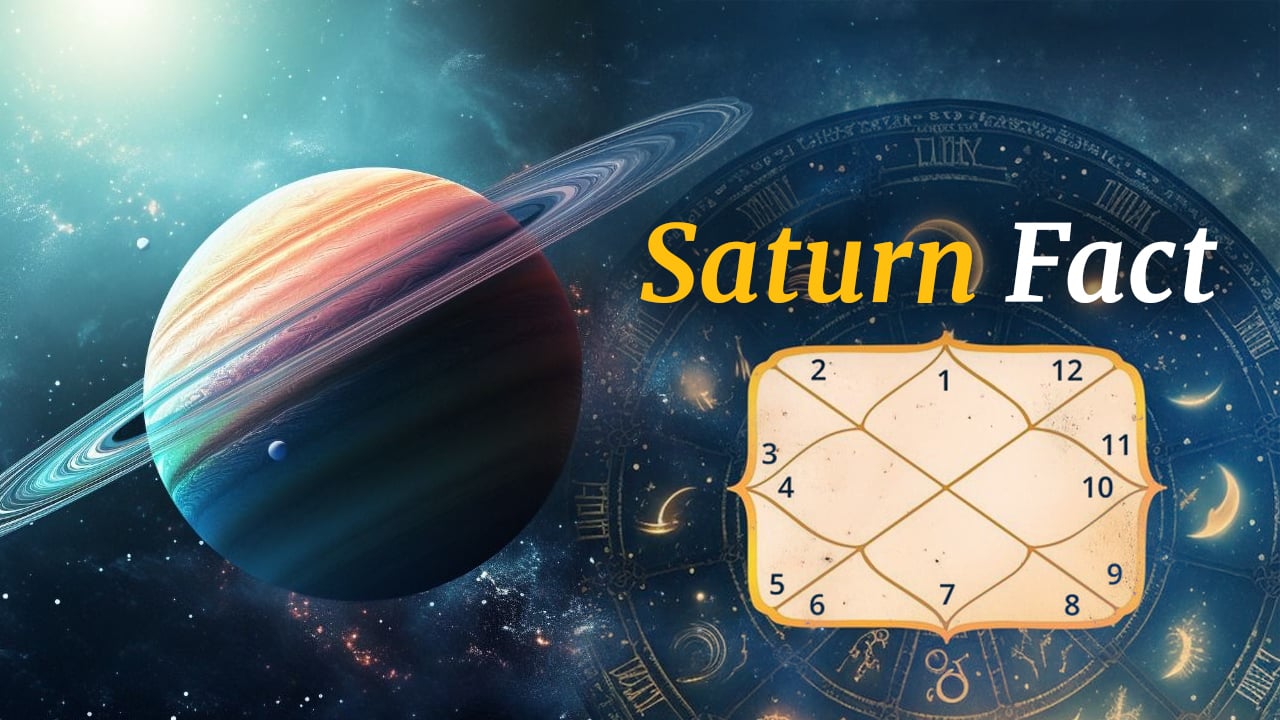
Have you ever gazed up at the night sky and wondered about the mysterious ringed planet that seems to float effortlessly among the stars? That celestial beauty is none other than Saturn Fact, the sixth planet from the Sun and a true jewel of our solar system. In this article, we’ll embark on a cosmic journey to uncover the secrets of this fascinating gas giant, from its iconic rings to its diverse moons and everything in between.
For interesting astrology-related videos, subscribe to us on YouTube
Physical Characteristics of Saturn
Size and Mass
Let’s start with the basics. Saturn Fact is a behemoth, second only to Jupiter in size among the planets in our solar system. Picture this: you could fit about 764 Earths inside Saturn! Despite its enormous size, Saturn is surprisingly light for its volume. In fact, it’s the least dense planet in our solar system – so light that it could theoretically float in a bathtub big enough to hold it. How’s that for a mind-bending thought?
Composition and Structure
Saturn Fact is primarily composed of hydrogen and helium, much like its big brother Jupiter. But don’t let its gaseous nature fool you – this planet has layers! Beneath its cloud tops lies a deep layer of metallic hydrogen, followed by a rocky core. It’s like a cosmic onion, each layer revealing something new about this fascinating world.
Atmospheric Features
Saturn’s atmosphere is a swirling masterpiece of bands and spots, though less dramatic than Jupiter’s. The most notable feature is the hexagonal storm at its north pole – a six-sided jet stream wider than several Earths. Can you imagine a storm so massive and geometrically perfect? It’s like nature decided to play with sacred geometry on a planetary scale!
Saturn’s Iconic Ring System
Composition of the Rings
Ah, the rings – Saturn Fact claim to fame! These spectacular bands are composed mainly of water ice, with some rocky debris mixed in. They’re incredibly thin – in some places no thicker than the height of a house – yet span a distance greater than the gap between Earth and the Moon. Talk about a cosmic disc!
Formation and Age of the Rings
The origin of Saturn Fact rings has long puzzled scientists. Are they as old as the planet itself, or a more recent addition? Recent studies suggest they might be younger than we thought – perhaps only 100 million years old. That’s practically yesterday in cosmic terms!
Read Also: Can Astrology Predict Your Marriage? Hanish Bagga Knows.
Divisions and Gaps in the Rings
Look closely, and you’ll see that Saturn Fact rings aren’t just one solid band. They’re divided into several main rings, labeled A through G, with the prominent Cassini Division separating rings A and B. It’s like nature’s own cosmic vinyl record, each groove telling a different story of Saturn’s history.
Saturn’s Diverse Moons
Titan: The Largest Moon
Saturn Fact family of moons is impressive, with Titan stealing the show. This moon is larger than the planet Mercury and is the only moon in our solar system with a dense atmosphere. It even has liquid methane lakes on its surface! Imagine kayaking on a moon millions of miles from Earth – now that would be an adventure!
Enceladus: The Icy Moon with Geysers
Enceladus might be small, but it packs a punch. This icy moon shoots plumes of water into space from its south pole, hinting at a subsurface ocean. Could there be life swimming in those alien seas? The thought alone is enough to spark the imagination of scientists and dreamers alike.
Other Notable Moons
Saturn Fact moon collection is like a box of cosmic chocolates – each one unique and fascinating. There’s Mimas, which looks eerily like the Death Star from Star Wars. Pan and Daphnis, shepherd moons that keep Saturn’s rings in check. And let’s not forget Hyperion, with its bizarre sponge-like appearance. It’s a veritable zoo of celestial oddities!

Exploration of Saturn
Early Observations
Humans have been observing Saturn for millennia. Galileo was the first to see its rings through a telescope in 1610, though he mistook them for large moons. Can you imagine the wonder he must have felt, peering through his rudimentary telescope at this ringed wonder?
Pioneer and Voyager Missions
The space age brought us closer to Saturn than ever before. Pioneer 11 made the first flyby in 1979, followed by Voyagers 1 and 2 in the early 1980s. These missions gave us our first detailed look at Saturn’s rings and moons, whetting our appetite for more.
Cassini-Huygens Mission
The Cassini-Huygens mission, launched in 1997, revolutionized our understanding of Saturn. For 13 years, Cassini orbited the ringed planet, sending back breathtaking images and invaluable data. The Huygens probe even landed on Titan, giving us our first glimpse of the surface of this mysterious moon. It was like having a robotic explorer sending postcards from an alien world!
Read Also: Is a Consultation with Hanish Bagga Worth It for Love Advice?
Interesting Facts about Saturn
Did you know that Saturn has the second-fastest rotation of any planet in our solar system? A day on Saturn lasts just 10.7 Earth hours! Or that Saturn’s density is so low that it would float in a bathtub large enough to hold it? These quirky facts make Saturn not just beautiful, but fascinatingly unique.
Saturn’s Role in Mythology and Culture
Saturn has captured human imagination for centuries. In Roman mythology, Saturn was the god of agriculture and time. Many cultures have woven stories around this ringed planet, seeing in it everything from celestial chariots to cosmic guardians. Even today, Saturn continues to inspire artists, writers, and dreamers with its ethereal beauty.
Future Missions and Research
While Cassini’s mission has ended, our exploration of Saturn is far from over. Future missions are being planned to further investigate its moons, particularly Titan and Enceladus, in search of potential habitable environments. Who knows what secrets these distant worlds might hold?
Conclusion of Saturn Facts
Saturn, with its magnificent rings and intriguing moons, stands as a testament to the wonders of our solar system. From its swirling storms to its icy moons, every aspect of this ringed giant invites us to learn more, to explore further, and to marvel at the cosmic beauty that surrounds us. As we continue to unveil Saturn’s secrets, we not only learn about a distant world but also gain new perspectives on our own place in the universe.
Read Also: Discover Love Marriage Possibilities with Date of Birth
FAQs of Saturn Facts
- How many moons does Saturn have?
- Saturn has 82 confirmed moons, with potentially more awaiting discovery.
- Can Saturn’s rings be seen from Earth?
- Yes, Saturn’s rings can be seen from Earth with a small telescope or even a good pair of binoculars.
- How long is a year on Saturn?
- A year on Saturn lasts about 29.5 Earth years.
- What makes Saturn’s moon Enceladus so special?
- Enceladus is known for its subsurface ocean and ice geysers, making it a potential candidate for harboring extraterrestrial life.
- Will Saturn’s rings eventually disappear?
- Scientists believe Saturn’s rings are slowly being pulled into the planet by gravity and may disappear in 100 million to 300 million years.