Saturn: The Planet of Rings Mysteries Explored
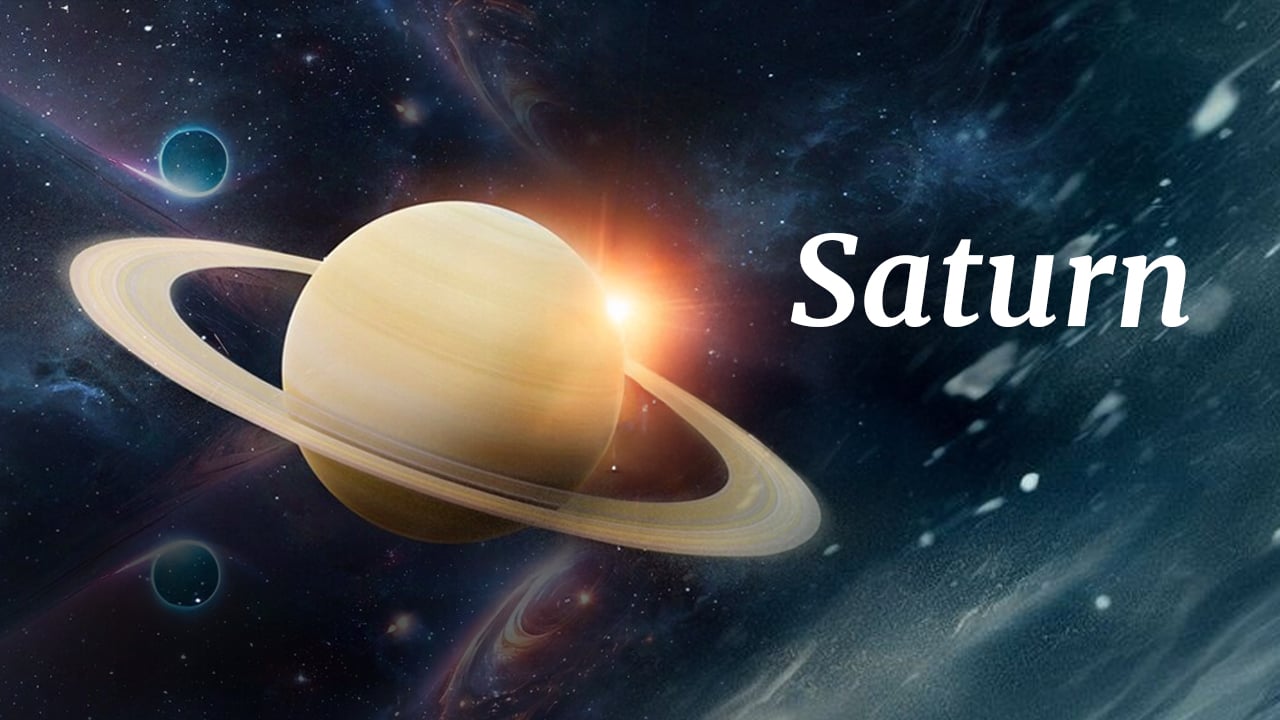
Introduction to Saturn Have you ever gazed up at the night sky and marveled at the beauty of Saturn? This majestic gas giant has captivated astronomers and stargazers for centuries with its stunning ring system and mysterious features. As the sixth planet from the Sun, holds a special place in our solar system, offering a…

Written by By Hanish Bagga
Introduction to Saturn
Have you ever gazed up at the night sky and marveled at the beauty of Saturn? This majestic gas giant has captivated astronomers and stargazers for centuries with its stunning ring system and mysterious features. As the sixth planet from the Sun, holds a special place in our solar system, offering a wealth of scientific discoveries and unanswered questions. Let’s embark on a journey to explore the wonders of this ringed planet and uncover some of its most intriguing secrets.
For interesting astrology-related videos, subscribe to us on YouTube
Physical Characteristics of Saturn
Size and Mass
Saturn is a true behemoth of the solar system. It’s the second-largest planet after Jupiter, with a diameter of about 116,460 kilometers (72,360 miles) at its equator. To put that into perspective, you could fit about 764 Earths inside ! Despite its massive size, is surprisingly light for its volume. In fact, it’s the only planet in our solar system that would float in water (if you could find a bathtub big enough, that is).
Composition and Structure
Unlike the rocky planets closer to the Sun, Saturn is primarily composed of hydrogen and helium. These gases make up about 96% of the planet’s volume, with traces of other elements like methane and ammonia. structure is layered, with a small rocky core surrounded by liquid metallic hydrogen, then liquid hydrogen, and finally a gaseous outer layer.
Atmosphere
Saturn’s atmosphere is a swirling mass of clouds and storms. The upper layers are composed mainly of ammonia crystals, giving the planet its characteristic pale yellow color. Deeper down, you’ll find water ice and ammonium hydrosulfide clouds. Wind speeds on can reach up to 1,800 kilometers per hour (1,118 miles per hour) near the equator, making Earth’s strongest hurricanes look like gentle breezes in comparison.
Read Also: Can Astrology Predict Your Marriage? Hanish Bagga Knows.
Saturn’s Iconic Ring System
Composition of the Rings
Ah, the rings of Saturn – arguably the planet’s most famous feature. These stunning bands are composed primarily of ice particles, ranging in size from tiny grains to chunks as large as a house. Contrary to popular belief, the rings aren’t solid. Instead, they’re made up of countless individual particles orbiting like tiny moons.

Formation Theories
How did Saturn get its rings? Scientists are still debating this question. One theory suggests that the rings formed from the debris of a shattered moon. Another proposes that they’re leftover material from the formation of itself. Whatever their origin, these rings have been captivating observers for centuries.
Divisions and Gaps
Saturn’s ring system is far from uniform. It’s divided into several distinct rings with gaps between them. The largest gap, known as the Cassini Division, is easily visible even with a small telescope. These divisions are caused by the gravitational influences of Saturn’s moons, which create resonances that clear out certain areas of the rings.
Saturn’s Moons
Titan: The Largest Moon
Titan is Saturn’s largest moon and a world of wonder in its own right. It’s the only moon in our solar system with a dense atmosphere, and it’s the only celestial body besides Earth where we’ve found stable bodies of surface liquid. However, on Titan, these lakes and seas are filled with liquid methane and ethane rather than water.
Enceladus: The Icy Moon
Enceladus might be small, but it’s full of surprises. This icy moon is home to geysers that shoot plumes of water ice into space. These plumes hint at the presence of a subsurface ocean, making Enceladus a prime candidate in the search for extraterrestrial life.
Other Notable Moons
Saturn has 82 confirmed moons, each with its own unique characteristics. From the two-faced Iapetus to the sponge-like Hyperion, moons offer a diverse array of celestial wonders waiting to be explored.
Exploration of Saturn
Early Observations
Humans have been observing Saturn for millennia. Ancient civilizations noted its slow movement across the night sky, but it wasn’t until the invention of the telescope that we began to uncover its secrets. Galileo Galilei was the first to observe rings in 1610, though he initially mistook them for two large moons.
Read Also: Is a Consultation with Hanish Bagga Worth It for Love Advice?
Voyager Missions
The Voyager missions of the late 1970s and early 1980s gave us our first close-up views of Saturn. These flybys provided invaluable data about the planet’s atmosphere, rings, and moons, paving the way for future exploration.
Cassini-Huygens Mission
The Cassini-Huygens mission, launched in 1997, revolutionized our understanding of Saturn. This joint NASA-ESA mission spent 13 years studying the system, sending back breathtaking images and groundbreaking scientific data. The mission concluded in 2017 with Cassini’s dramatic plunge into atmosphere.
Mysteries and Ongoing Research
Saturn’s Hexagonal Storm
One of Saturn’s most bizarre features is a hexagonal-shaped storm at its north pole. This massive storm, spanning about 25,000 kilometers (15,500 miles) across, has puzzled scientists since its discovery. What forces could create and maintain such a geometrically perfect storm?
Ring System Evolution
Recent observations suggest that Saturn’s rings might be much younger than previously thought – perhaps only 100 million years old. This raises questions about how and when they formed, and how long they’ll last. Are we living in a special time to observe with its magnificent rings?
Potential for Life
While Saturn itself is inhospitable to life as we know it, some of its moons show promise. The subsurface oceans of Enceladus and the methane lakes of Titan could potentially harbor simple forms of life. Future missions aim to explore these possibilities.
Read Also: Discover Love Marriage Possibilities with Date of Birth
Conclusion of Saturn
Saturn, with its majestic rings and multitude of moons, continues to captivate and inspire us. From the swirling storms in its atmosphere to the icy geysers of Enceladus, this gas giant offers a wealth of wonders and mysteries. As we continue to explore and study , we not only learn more about this fascinating planet but also gain insights into the formation and evolution of our solar system. The story of is far from over, and who knows what incredible discoveries await us in the future?
FAQs of Saturn
- How long is a day on Saturn?
- A day on lasts about 10 hours and 34 minutes, making it one of the fastest rotating planets in our solar system.
- Can humans live on Saturn?
- No, humans cannot live on. It’s a gas giant with no solid surface, extreme pressures, and temperatures far too cold for human survival.
- How many Earth years does it take Saturn to orbit the Sun?
- Saturn takes about 29.5 Earth years to complete one orbit around the Sun.
- Are Saturn’s rings visible from Earth without a telescope?
- While itself is visible to the naked eye, you’ll need at least a small telescope to see its rings clearly.
- What would happen if you tried to land on Saturn?
- If you tried to land on, you’d find there’s no surface to land on. Instead, you’d sink into the planet’s atmosphere, crushed by immense pressure and extreme cold.