Faith in Every Detail: Amazing Planetary Magnification
Energize your stargazing with powerful planetary magnification tips. See planets in stunning detail and transform your night sky adventures

Written by By Hanish Bagga
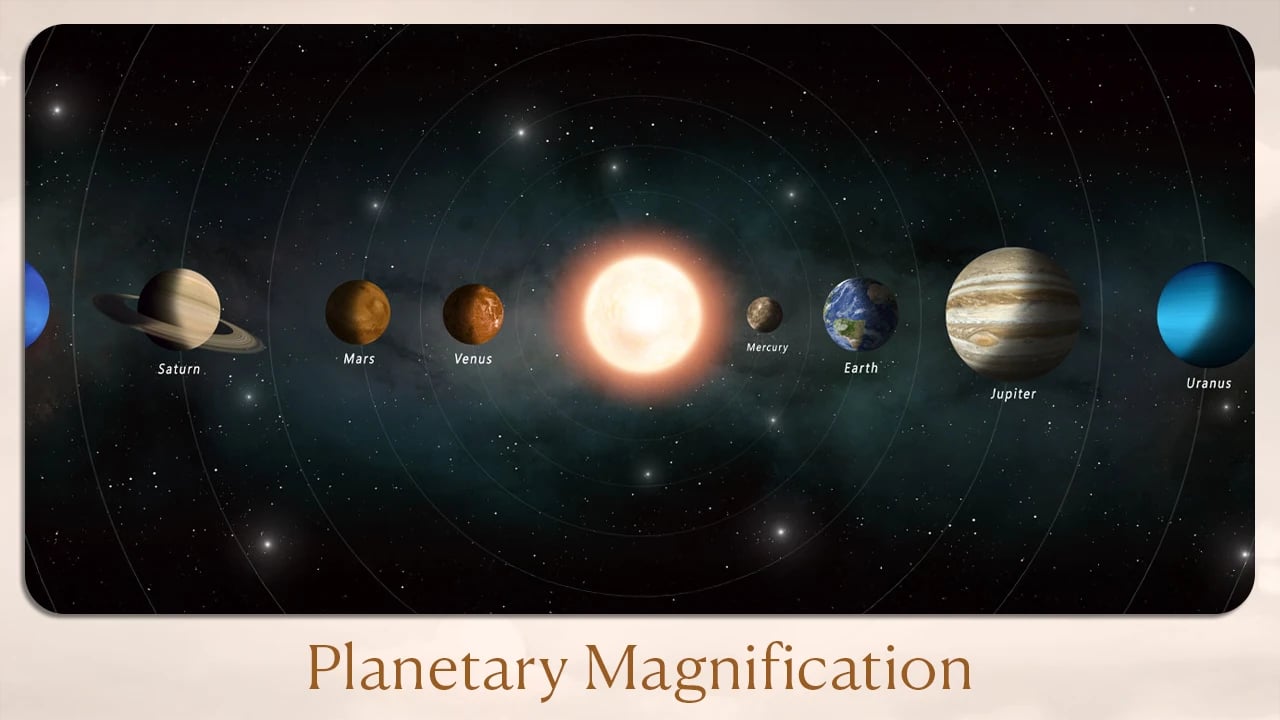
Introduction to Planetary Magnification
Have you ever gazed up at the night sky and wondered what secrets those twinkling dots hold? For centuries, humans have looked to the heavens, driven by curiosity and a quiet faith that every detail matters. Today, with the help of planetary magnification, we can peer deeper into the cosmos than ever before. But what does it really mean to have faith in every detail, especially when it comes to exploring our universe? Let’s embark on a journey that blends science, wonder, and a touch of faith.
Read Also: Unlocking the Secrets of Mulank Numbers for Perfect Compatibility
What is Planetary Magnification?
Planetary is the process of enlarging the view of planets and other celestial bodies using optical instruments like telescopes. It’s like having a cosmic zoom lens, allowing us to see features that are otherwise invisible to the naked eye. This magnification doesn’t just make things bigger—it brings the universe closer, detail by detail.

The Science Behind Magnification
How Telescopes Work
Telescopes are the unsung heroes of astronomy. They gather light from distant objects and focus it, making faint and faraway planets appear brighter and larger. Think of a telescope as a time machine and a magnifying glass rolled into one—it lets us see not just farther, but also deeper into the past.
Types of Magnification
There are two main types of magnification: optical and digital. Optical magnification uses lenses or mirrors to enlarge images, while digital magnification relies on cameras and software. Both have their strengths, but nothing beats the thrill of seeing Saturn’s rings through a powerful eyepiece.
A Brief History of Planetary Observation
Ancient Stargazers
Long before telescopes, ancient civilizations mapped the stars with the naked eye. They built monuments aligned with planetary movements and wove stories around the patterns they saw. Their faith in the cosmos was unshakable, even without modern tools.
The Age of Galileo
Enter Galileo Galilei, the father of modern astronomy. With his homemade telescope, he discovered Jupiter’s moons and the phases of Venus. His faith in observation over dogma changed the way we see our place in the universe.
Faith and Curiosity: The Human Drive to Explore
Why do we keep looking up? It’s a mix of curiosity and faith—a belief that every detail, no matter how small, could unlock a cosmic secret. This drive has fueled centuries of discovery, from the first star charts to the latest space probes.
The Role of Faith in Scientific Discovery
Science and faith might seem like opposites, but they often go hand in hand. Scientists must trust their instruments, their data, and sometimes, their intuition. Every time we point a telescope skyward, we’re betting that the universe has more to show us.
Modern Tools for Planetary Magnification
Amateur Telescopes
You don’t need a PhD or a million-dollar lab to explore the planets. Today’s amateur telescopes are affordable, portable, and surprisingly powerful. With a bit of patience, anyone can spot Jupiter’s moons or Saturn’s rings from their backyard.
Professional Observatories
Professional observatories take things to the next level. Massive telescopes, some as big as a house, scan the skies from mountaintops and deserts. These giants can reveal details as small as a few kilometers on distant planets.
Space Telescopes
When Earth’s atmosphere gets in the way, we send telescopes into space. The Hubble Space Telescope, for example, has captured breathtaking images of planets, nebulae, and galaxies—free from atmospheric distortion.
Amazing Details Revealed: What We See Up Close
Craters on the Moon
With even a modest telescope, the Moon transforms from a flat disk to a rugged landscape. Craters, mountains, and valleys leap into view, each telling a story of cosmic collisions and ancient history.
Storms on Jupiter
Jupiter is a planet of extremes. Through magnification, we can watch its swirling storms, including the famous Great Red Spot—a hurricane larger than Earth that’s been raging for centuries.
Rings of Saturn
Saturn’s rings are one of the solar system’s most iconic sights. Up close, they reveal intricate patterns and gaps, each shaped by gravity and time. It’s like looking at a cosmic vinyl record spinning in the void.
Mars’ Polar Ice Caps
Mars isn’t just a red dot—it’s a world with seasons, weather, and polar ice caps. With the right magnification, you can watch these caps grow and shrink as Martian seasons change.
The Art of Patience: Waiting for the Perfect View
Astronomy isn’t always about instant gratification. Sometimes, clouds roll in or the atmosphere shimmers, blurring your view. But with patience and faith, those perfect moments come—when the sky clears and the universe reveals its secrets.
Faith in the Unseen: Trusting the Process
Not every observation yields a discovery. Sometimes, you spend hours staring at a blurry dot. But faith in the process keeps astronomers going. Every detail, even the ones we can’t see yet, matters.
Magnification and the Search for Life
Planetary magnification isn’t just about pretty pictures. It’s a tool in the search for life beyond Earth. By studying the atmospheres and surfaces of other worlds, scientists look for signs—however faint—that we’re not alone.
How Planetary Magnification Inspires Awe
There’s something magical about seeing another world up close. It’s a reminder of how vast and mysterious the universe is—and how much there is left to discover. Every crater, storm, and ring is a testament to the beauty of detail.
Challenges in Planetary Observation
Atmospheric Distortion
Earth’s atmosphere is both a blessing and a curse. It protects us, but it also distorts the light from distant planets. Astronomers use adaptive optics and other tricks to sharpen their view, but sometimes, the atmosphere wins.
Light Pollution
City lights can wash out the stars and planets. That’s why many observatories are built in remote locations, far from the glow of civilization. If you’re stargazing at home, turning off outdoor lights can make a big difference.
The Future of Planetary Magnification
Upcoming Technologies
The next generation of telescopes promises even more detail. Projects like the James Webb Space Telescope and the Extremely Large Telescope will peer deeper into space, revealing features we can only dream of today.
Citizen Science and Public Involvement
You don’t have to be a professional to make a difference. Citizen science projects invite the public to help analyze data, spot new features, and even discover new planets. Faith in every detail means everyone can play a part.
Conclusion of Planetary Magnification
Planetary magnification is more than just a technical achievement—it’s a celebration of curiosity, patience, and faith. Every time we zoom in on a distant world, we’re reminded that the universe is full of wonders, waiting to be discovered. So next time you look up, remember: every detail matters, and faith in those details can lead to amazing discoveries.
Read Also: Understanding Angel Number 0808: Meaning, Abundance Spiritual Guidance
FAQs of Planetary Magnification
Q1:What is the best telescope for planetary magnification at home?
Ans: A good beginner telescope is a 4- to 6-inch reflector or refractor. Brands like Celestron and Orion offer affordable, user-friendly models.
Q2:Can I see planets without a telescope?
Ans: Yes! Some planets, like Venus, Jupiter, and Saturn, are visible to the naked eye. A telescope, however, reveals much more detail.
Q3:Why does the atmosphere affect planetary observation?
Ans: Earth’s atmosphere bends and scatters light, causing stars to twinkle and planets to blur. This is called “seeing” and can limit the clarity of your view.
Q4:How do scientists search for life on other planets?
Ans: They use magnification to study planetary atmospheres, looking for gases like oxygen or methane that could indicate life.
Q5:What’s the most amazing detail ever seen through a telescope?
Ans: That’s subjective, but many astronomers are awed by Saturn’s rings, Jupiter’s storms, and the intricate craters of the Moon. Each detail tells a story!
For interesting astrology-related videos, subscribe to us on Youtube