Rameshwaram Jyotirlinga Temple – History, Spiritual Significance & Sacred Geography
Introduction to Rameshwaram Jyotirlinga: The Rameshwar Jyotirling, with its imposing architecture, offers a perfect environment to pilgrims to cruise on their spiritual explorations without any hindrance. Rameshwaram Jyotirlinga Location is on picturesque Pamban Island in the State of Tamil Nadu, India. Rameshwaram Jyotirlinga, Rameshwar Jyotirlinga is unique for its architectural marvel and the longest corridors…

Written by By Hanish Bagga
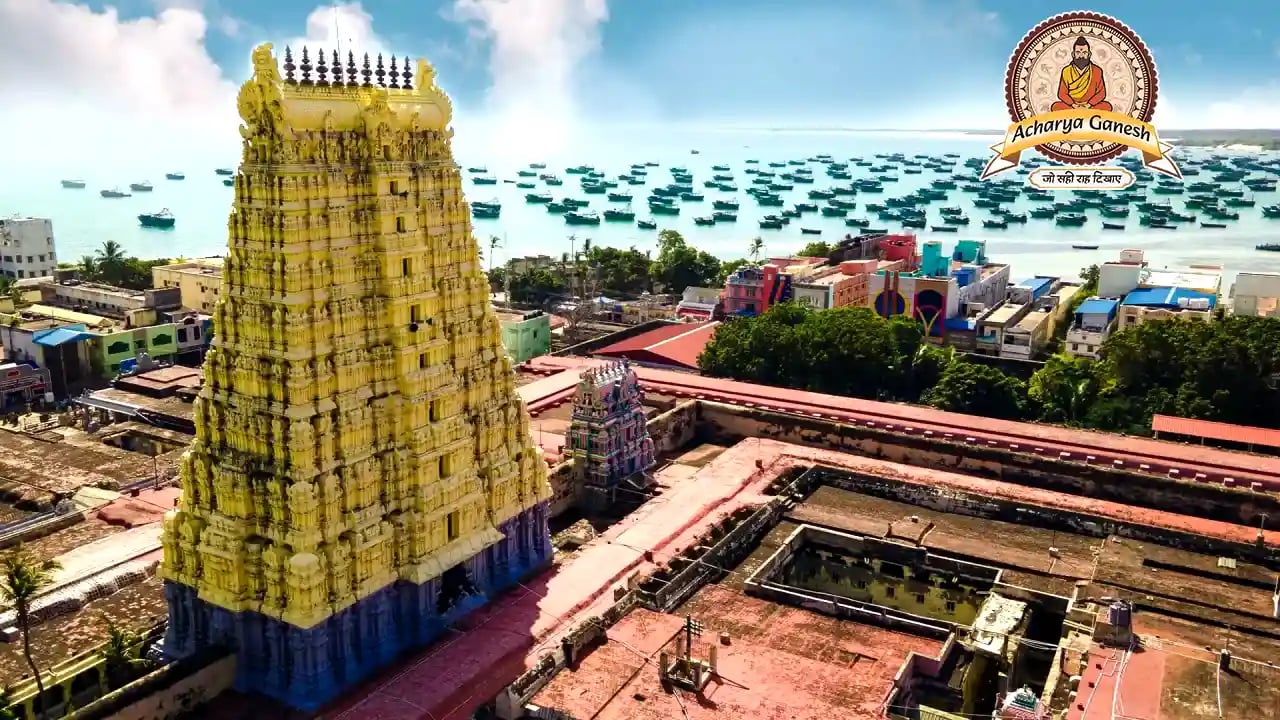
Introduction to Rameshwaram Jyotirlinga Temple
The Rameshwaram Jyotirlinga Temple holds a rare and powerful position among the 12 Jyotirlingas of Lord Shiva. It is not only a sacred shrine of Mahadev but also a place that teaches one of the deepest spiritual lessons of Sanatan Dharma—humility after victory and surrender after action.
Located in the holy Rameshwaram city on Pamban Island in Tamil Nadu, this temple stands at the meeting point of devotion, karma, and inner purification. Pilgrims visiting Rameshwaram in India often describe the experience as calm yet intense, simple yet transformative.
Read Also: Jyotirlingas

Rameshwaram Jyotirlinga Temple Location and Setting
The Rameshwaram Jyotirlinga Temple is situated in Rameshwaram Tamil Nadu, surrounded by the vast ocean and sacred water bodies. The geographical placement itself carries spiritual meaning. In traditional understanding, land surrounded by water represents the dissolution of ego and emotional cleansing.
The town of Rameshwaram is connected to the mainland by the iconic Pamban Bridge and lies close to Rameshwaram Setu, also known as Ram Setu. This sacred geography reinforces the idea that Rameshwaram is not merely a destination but a threshold between action and surrender.
Spiritual Importance of Rameshwaram Jyotirlinga
Among all Jyotirlingas, Rameshwaram Jyotirlinga Temple is unique because it represents atonement and balance. According to tradition, Lord Rama worshipped Lord Shiva here after defeating Ravana. Though the victory was righteous, it still required inner cleansing and humility.
This act conveys a powerful spiritual truth:
Even justified actions create karma, and karma must be resolved through awareness and devotion.
That is why Rameshwaram is often associated with inner correction, repentance, and restoration of balance.
Read Also: How to Please Lord Shiva
Rameshwaram Jyotirlinga Story
The Rameshwaram Jyotirlinga story narrates that Lord Rama instructed Hanuman to bring a Shiva Linga from Mount Kailash. When Hanuman was delayed, Goddess Sita created a Shivalinga from the sacred sand of Rameshwaram city, which Lord Rama consecrated and worshipped.
Later, the Linga brought by Hanuman was also installed and is worshipped as Vishwalingam. This dual consecration symbolizes an important spiritual idea—intention and devotion hold equal power to divine origin.
History of Rameshwaram Temple
The Rameshwaram temple in its present form was largely developed during the Pandya dynasty in the 12th century. Over time, various rulers contributed to its expansion, transforming it into one of the most architecturally impressive temples in India.
Despite renovations and historical changes, the spiritual essence of the Rameshwaram Jyotirlinga Temple has remained untouched, continuing to draw seekers across generations.

Architectural Grandeur of Rameshwaram Jyotirlinga Temple
The temple is famous for having the longest corridor among all Hindu temples, stretching over 1,220 meters with 1,212 intricately carved granite pillars. Walking through these corridors feels meditative, almost like moving through layers of consciousness.
Inside the temple complex, devotees encounter:
- The sacred Jyotirlinga of Lord Shiva
- A towering 17.5-foot Nandi statue
- 108 Shiva Lingams
- Beautiful depictions of divine forms carved into stone
The architecture itself invites silence, patience, and inner stillness.
The 22 Theerthams: Sacred Water and Inner Purification
One of the most distinctive features of the Rameshwaram Jyotirlinga Temple is the presence of 22 sacred theerthams (water wells) inside the temple complex. Devotees bathe in these wells before darshan, believing the ritual purifies past impressions and emotional burdens.
Water, in spiritual symbolism, represents the mind. Bathing in these theerthams is seen as a way of cleansing mental patterns and restoring inner clarity.
Rameshwaram Setu and the Deeper Meaning of the Journey
The proximity of Rameshwaram Setu adds another layer of spiritual meaning. According to the Ramayana, this bridge was constructed to reach Lanka and restore dharma.
Symbolically, the Setu represents the bridge between ego and surrender, effort and grace. This makes Rameshwaram in India a place where seekers reflect not only on devotion but also on responsibility and restraint.
Explore Also: Astrology for Turning Career Pressure into Success
Other Deities and Sacred Presence
Apart from Lord Shiva, the Rameshwaram Jyotirlinga Temple houses shrines dedicated to Goddess Vishalakshi, Parvathavardhini, Lord Ganesha, and Lord Subrahmanya. Together, these forms represent balance between strength, wisdom, compassion, and discipline.
Dress Code, Timings, and Temple Discipline
The temple follows strict traditions to preserve sanctity. Modest attire is mandatory, emphasizing respect and humility over appearance.
Temple Timings:
5:00 am – 1:00 pm
3:00 pm – 9:00 pm
Early morning Spatika Linga darshan and Abhishekam are considered especially serene.
Best Time to Visit Rameshwaram Jyotirlinga Temple
While spiritually auspicious throughout the year, the most comfortable period to visit Rameshwaram Tamil Nadu is between October and April, when the climate is pleasant and suitable for temple rituals and pilgrimages.
How to Reach Rameshwaram City
- Nearest Airport: Madurai (approx. 180 km)
- Nearest Railway Station: Rameshwaram (RMM), about 1 km from the temple
- Bus Connectivity: Well-connected to major cities in Tamil Nadu
The ease of access makes Rameshwaram city one of the most visited pilgrimage destinations in southern India.
Conclusion: The Deeper Essence of Rameshwaram Jyotirlinga
The Rameshwaram Jyotirlinga Temple is more than a sacred site—it is a reminder that true strength lies in humility, and true devotion lies in inner correction. Situated in Rameshwaram in India, this Jyotirlinga teaches that liberation is not achieved through victory alone, but through surrender after action.
Pilgrims leave Rameshwaram Tamil Nadu not just with memories, but with a sense of calm, clarity, and emotional lightness—qualities that linger long after the journey ends.
Book a Consultation with Acharya Ganesh
Discover the deeper spiritual and karmic significance of the Rameshwaram Jyotirlinga Temple and understand how Shiva tattva shapes your life journey. Receive personalized guidance from Acharya Ganesh, known for his clarity-driven insights and disciplined, result-oriented approach.
Whether you are seeking direction in career, relationships, health, or inner growth, Acharya Ganesh helps you recognize karmic patterns and offers practical remedies, conscious discipline, and guidance aligned with Shiva energy—focused on balance, awareness, and long-term stability.
Local & Global Consultations (Online & Offline)
Whether you are based in Delhi, Mumbai, or Bengaluru, or living abroad in the USA, UK, or Canada, consultations are available to address life challenges with depth, sensitivity, and precision.
Acharya Ganesh Astrology Center
201, Plot No. 959, Opp. Orange County,
Niti Khand I, Indirapuram, Ghaziabad, U.P. 203014
🌐 Visit: www.acharyaganesh.com
📞 Call: 07300004326
For meaningful astrology and spiritual insights, subscribe to our YouTube channel.
Online & offline consultations available across India.
Frequently Asked Questions (FAQs) of 12 Jyotirlinga of Lord Shiva
Q1.How many Jyotirlingas are in Rameshwaram?
Ans: There is one Jyotirlinga in Rameshwaram, known as the Rameshwaram Jyotirlinga Temple. It is one of the 12 Jyotirlingas of Lord Shiva mentioned in sacred texts. Although two Shiva Lingas are worshipped inside the temple—the one made by Goddess Sita and the Vishwalingam brought by Hanuman—only the main consecrated Linga is counted as the Jyotirlinga.
Q2.In which city is Rameshwaram Jyotirlinga located?
Ans: The Rameshwaram Jyotirlinga is located in the holy Rameshwaram city, situated on Pamban Island in the state of Tamil Nadu. Rameshwaram is one of the most sacred pilgrimage towns in India and holds deep spiritual importance due to its connection with Lord Rama and Lord Shiva.
Q3.How to visit Rameshwaram Jyotirlinga?
Ans: To visit the Rameshwaram Jyotirlinga Temple, pilgrims can travel by train, road, or air. The nearest airport is Madurai, approximately 180 kilometers away. Rameshwaram has its own railway station, located about 1 kilometer from the temple, making train travel the most convenient option. Well-connected buses and taxis are also available from major cities in Tamil Nadu. Many devotees begin their visit with a holy bath in the sacred theerthams before darshan, following traditional temple discipline.
Q4.Is there a Jyotirlinga in Rameshwaram?
Ans: Yes, there is a Jyotirlinga in Rameshwaram known as the Rameshwaram Jyotirlinga Temple. It is one of the 12 Jyotirlingas of Lord Shiva and holds great religious significance because Lord Rama himself worshipped Lord Shiva here after defeating Ravana. Although two Shiva Lingas are present in the temple—the one made by Goddess Sita and the Vishwalingam brought by Hanuman—only the main consecrated Linga is counted as the Jyotirlinga.
Q5.Where are the 12 Jyotirlingas in India?
Ans: The 12 Jyotirlingas in India are spread across different regions of the country, symbolizing Shiva’s presence throughout the land. They are located at Somnath in Gujarat, Mallikarjuna in Andhra Pradesh, Mahakaleshwar and Omkareshwar in Madhya Pradesh, Kedarnath in Uttarakhand, Bhimashankar and Trimbakeshwar in Maharashtra, Kashi Vishwanath in Uttar Pradesh, Vaidyanath in Jharkhand, Nageshwar in Gujarat, Rameshwaram in Tamil Nadu, and Grishneshwar in Maharashtra. Together, these sacred sites form the most important Shiva pilgrimage circuit in India.