Ultimate Guide: Thrilling Nakshatra Purusha Wisdom
Explore Nakshatra Purusha, the cosmic person formed by the 27 Nakshatras in Vedic astrology. Learn how each part of the celestial body.

Written by By Hanish Bagga
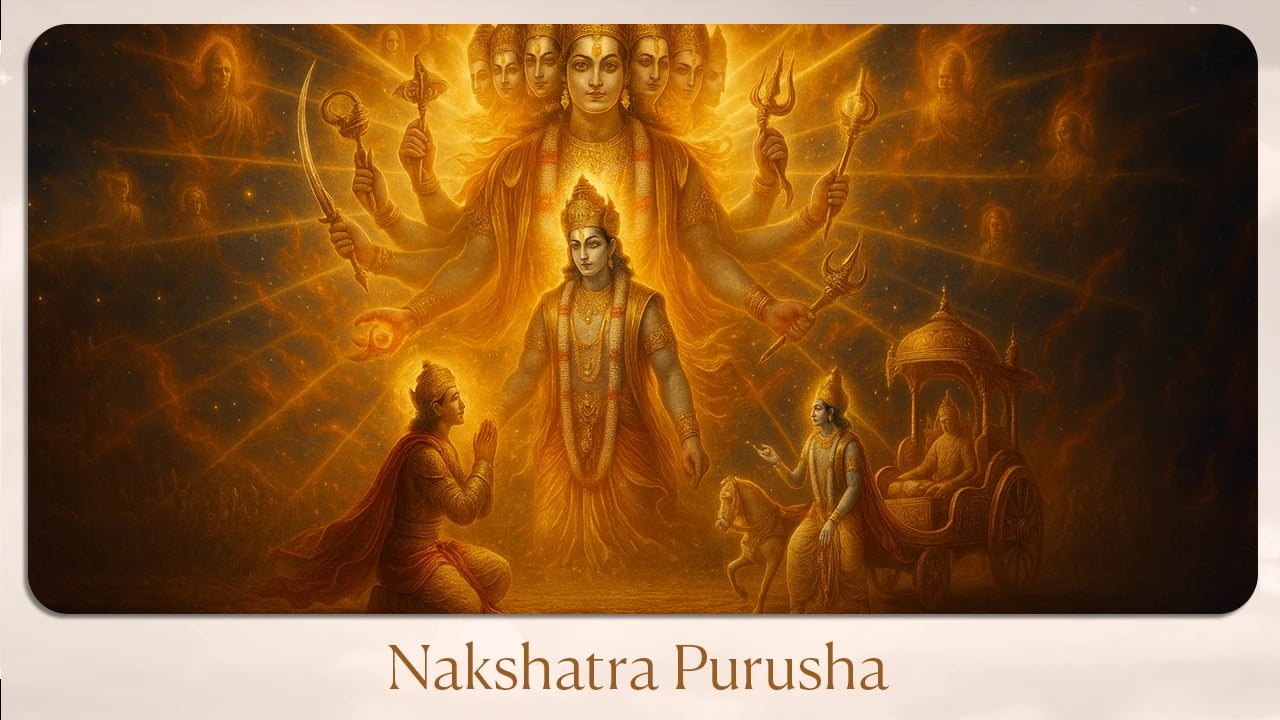
Nakshatra Purusha
Have you ever wondered how ancient sages connected the stars above with the human body below? Welcome to the fascinating world of Nakshatra Purusha – a profound concept that maps our cosmic blueprint onto the human form. This ancient Vedic wisdom reveals how each of the 27 nakshatras corresponds to specific body parts, creating a divine template that bridges heaven and earth.
Read Also: Understanding Angel Number 0808: Meaning, Abundance Spiritual Guidance
What Are Nakshatras?
Think of nakshatras as cosmic neighborhoods where the moon loves to hang out. These 27 lunar mansions divide the zodiac into precise segments, each spanning 13 degrees and 20 minutes. Unlike the 12 zodiac signs we commonly hear about, nakshatras offer a more detailed and nuanced understanding of celestial influences.
Each nakshatra carries its unique energy, deity, and symbolism, painting a rich tapestry of cosmic consciousness that has guided humanity for thousands of years.

The Concept of Cosmic Body in Vedic Astrology
The Nakshatra Purusha concept embodies the ancient principle "As above, so below." Just as our physical body has different organs serving various functions, the cosmic body of nakshatras represents different aspects of universal consciousness manifesting through human experience.
This isn't just poetic metaphor – it's a sophisticated system that helps us understand how celestial energies influence our physical, mental, and spiritual well-being.
Understanding the 27 Nakshatras
Picture the night sky as a giant cosmic wheel, divided into 27 equal parts. Each nakshatra is like a spoke in this wheel, contributing to the grand design of cosmic influence. From Ashwini (the horse riders) to Revati (the wealthy), each carries specific qualities that shape human destiny.
Read Also: Astrology for Turning Career Pressure into Success
The Divine Mapping: Body Parts and Nakshatras
Head and Crown Region
The journey begins at the crown, where Ashwini nakshatra governs the head region. This makes perfect sense – Ashwini represents new beginnings, just as the head leads the body. The Bharani nakshatra follows, connecting to the facial features and representing the gateway of life and death.
Torso and Heart Center
Moving down, we encounter nakshatras governing the chest, heart, and vital organs. Rohini, known for its beauty and creativity, influences the face and neck region, while Mrigashira extends its influence to the shoulders and arms.
Lower Body and Foundation
The foundation nakshatras like Moola and Purva Ashadha govern the hips, thighs, and reproductive organs, symbolizing our connection to earth and ancestral roots.
Read Also: Best Astrologer in London
Ashwini to Bharani: The Beginning Nakshatras
Ashwini, ruled by the divine physicians Ashwini Kumaras, governs the head and represents healing energy. People born under this nakshatra often possess natural healing abilities or gravitate toward medical fields.
Bharani, governed by Yama (the lord of death), controls the forehead and represents the cycle of life and death. It's the cosmic gatekeeper, teaching us about transformation and renewal.
Read Also: Secrets of Nakshatra
Rohini to Ardra: The Growth Phase
Rohini nakshatra, beloved of the Moon, influences the face and eyes. Known for its beauty and material abundance, it represents the blossoming phase of life.
Mrigashira, the searching deer, governs the neck and shoulders, symbolizing our quest for knowledge and new experiences.
Ardra, ruled by Rudra, affects the arms and hands, representing destruction that leads to renewal – like a storm that clears the air.
Punarvasu to Pushya: The Nurturing Cycle
Punarvasu, meaning "return of the light," influences the chest region and represents renewal and restoration. It's like hitting the reset button on life.
Pushya, considered one of the most auspicious nakshatras, governs the chest and lungs, symbolizing nourishment and spiritual growth.
Ashlesha to Magha: The Transformation
Ashlesha nakshatra affects the heart region and represents the coiled serpent energy – kundalini. It's about transformation through embracing our shadow aspects.
Magha, connected to our ancestors, influences the heart and represents royal power and lineage. It reminds us of our connection to those who came before.
Hasta to Swati: The Balance and Skill
Hasta, literally meaning "hand," naturally governs the hands and represents skill and craftsmanship. People influenced by Hasta often excel in manual arts or detailed work.
Chitra affects the lower abdomen and represents the cosmic architect, while Swati influences the pelvis and represents independence and flexibility.
Shravana to Revati: The Completion
The final nakshatras complete the cosmic body. Shravana governs the knees and represents learning through listening. Dhanishtha affects the ankles and represents rhythm and prosperity.
Shatabhisha influences the right leg and represents healing through solitude, while Purva Bhadrapada and Uttara Bhadrapada govern the left leg and feet, representing the final stages of spiritual evolution.
Revati, the final nakshatra, completes the cosmic circle and represents wealth, nourishment, and the journey's end that becomes a new beginning.
Conclusion of Nakshatra Purusha
The Nakshatra Purusha represents one of humanity's most sophisticated attempts to understand our cosmic connection. By mapping the 27 nakshatras onto the human body, ancient sages created a bridge between astronomical observation and practical life guidance.This cosmic body isn't just an abstract concept – it's a living blueprint that continues to offer insights into our nature, health, and spiritual journey. Whether you're seeking to understand your own nakshatra influence or simply curious about this ancient wisdom, the Nakshatra Purusha reminds us that we are truly children of the stars, carrying cosmic intelligence within our very cells. Remember, we're not separate from the cosmos – we are the cosmos expressing itself in human form, with each nakshatra contributing to our unique cosmic signature.
FAQs of Nakshatra Purusha
Q1.How do I find out which nakshatra governs which part of my body?
Ans: Your birth nakshatra determines your primary cosmic influence, but all 27 nakshatras contribute to your overall cosmic body. A Vedic astrologer can provide a detailed analysis based on your birth chart.
Q2.Can the Nakshatra Purusha concept help with health issues?
Ans: While not a substitute for medical care, understanding your nakshatra influences can complement traditional healthcare by highlighting areas that might need extra attention or specific types of care.
Q3.Do all 27 nakshatras affect everyone equally?
Ans: No, your birth nakshatra has the strongest influence, followed by the nakshatras of other planets in your birth chart. However, as the moon transits through all nakshatras monthly, we experience subtle influences from each.
Q4.Is Nakshatra Purusha concept scientifically proven?
Ans: While not validated by modern science, this ancient system represents sophisticated astronomical observation combined with empirical understanding of human nature developed over thousands of years.
Q5.How does Nakshatra Purusha differ from Western astrology body rulerships?
Ans: The Nakshatra Purusha system is more detailed, using 27 divisions instead of 12, and is based on lunar mansions rather than solar zodiac signs, providing a more nuanced understanding of cosmic influences on the human body.
For interesting astrology-related videos, subscribe to us on Youtube