Water Tank Vastu: Overhead Tank, Underground Tank & Placement
Complete water tank Vastu guide covering overhead tank, underground tank, direction, placement and remedies.

Written by By Hanish Bagga
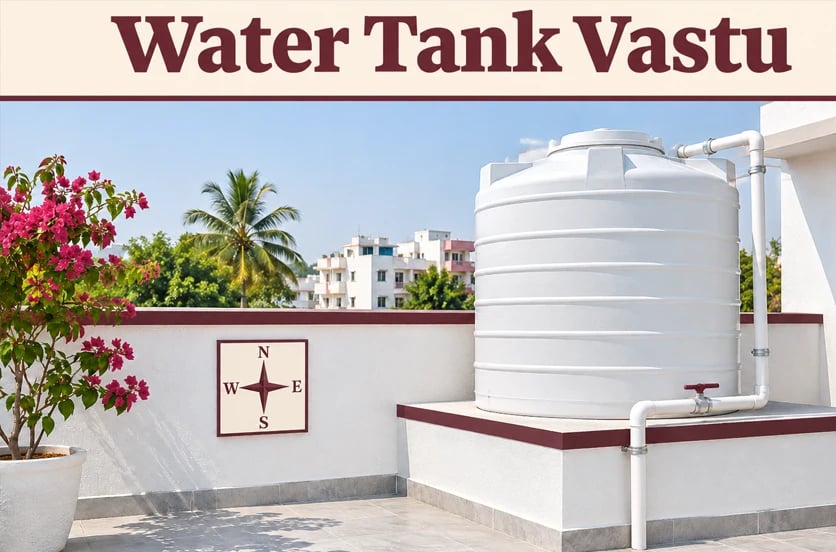
Water Tank Vastu: A Complete Guide to Water Storage
Water tanks are essential for daily water supply. Because they affect hygiene, maintenance and safety, their location and placement matter both practically and according to traditional Vastu principles.
In Vastu Shastra, water tanks are often associated with flow and storage. Their direction and placement are considered important because they affect access and maintenance.
This guide explains water tank Vastu in a practical, balanced way. It is useful for homeowners, apartment residents and anyone planning a water tank or renovation.
Expert-review note: All directional, remedy and Astro Vastu recommendations must be reviewed and approved by Hanish Bagga before publication.
What Is Water tank Vastu?
Water tank Vastu considers the location, arrangement and practical use of the relevant space or element. It looks beyond direction alone and includes placement, movement, ventilation, safety and the relationship with nearby areas.
Ideal Direction or Location
Traditional Vastu commonly considers the north-east, north and east suitable for water-related storage. The best location depends on the property type, plumbing, structural design and maintenance access.
North-East water tank
A north-east water tank is commonly considered favourable in traditional Vastu. Ensure the tank is safe, accessible and well maintained.
North water tank
A north water tank may be considered suitable depending on layout and plumbing. Focus on access and maintenance.
East water tank
An east water tank may be considered suitable depending on layout and plumbing. Focus on access and maintenance.
West water tank
A west water tank may be considered depending on layout and plumbing. Focus on access and maintenance.
South-East water tank
A south-east water tank requires careful assessment. It is often associated with fire in traditional Vastu.
Exact Placement Guidance
Place the water tank in a location that supports safe access for cleaning and maintenance. Ensure the tank is properly sealed, supported and protected from contamination.
Orientation and Facing Direction
Water tanks do not have a fixed facing direction. Focus on safe access, structural support, hygiene and maintenance.
Layout Guidance
Plan the water tank so that it does not obstruct movement, drainage or structural elements. Keep the area around the tank accessible for cleaning and repairs.
Colours
Use colours that make the tank visible and easy to maintain. Avoid excessive decoration around the tank.
Materials and Elements
Use durable, food-safe materials for the tank and pipes. Avoid materials that trap moisture or are difficult to clean.
Lighting and Ventilation
Use adequate lighting around the tank for safe access. Avoid harsh glare or dark corners. Ensure the area is safe and accessible.
Doors and Windows
Ensure the water tank area does not obstruct movement. Avoid placing the tank directly in line with the bathroom or storage area.
Shape and Size
An unusually narrow or irregular tank area can affect access and maintenance. Where possible, maintain clear walkways and avoid overcrowding the space.
Important Objects and Equipment
The following elements should be considered while planning or reviewing this space:
• Overhead tank
• Underground tank
• Pipes
• Pump
• Drainage
• Access ladder
• Water outlet
• Maintenance area
Common Vastu Mistakes
Avoid treating Vastu as a set of fear-based rules. The following are practical issues that can affect comfort, safety, usability and the overall feel of the space:
• Blocking access for cleaning and maintenance.
• Allowing water to leak or accumulate.
• Placing the tank in an unsafe or unsupported location.
• Ignoring contamination or poor sealing.
• Making plumbing changes without a qualified professional.
Existing Wrong Placement: What Can Be Done?
If the water tank location cannot be changed, improve access, sealing, drainage and maintenance. Avoid making changes that compromise safety or hygiene.
Remedies and Corrections
Avoid generic internet remedies. Focus on practical, safe and reversible improvements first. Any remedy should be reviewed by Hanish Bagga and should not involve unsafe electrical work, structural changes or disturbance to religious sentiments.
New Construction Versus Existing Property
In a new construction, direction and layout can be planned before construction. In an existing property, focus on practical improvements that do not require major structural work.
Flat Versus Independent House
In apartments, water tank location is usually fixed by the building design. Focus on maintenance access, hygiene, leakage and drainage.
Special Situations
• Overhead tank: assess structural support and safety.
• Underground tank: assess drainage and access.
• Rented apartment: focus on maintenance access and hygiene.
• Water tank near kitchen: assess hygiene and plumbing.
What If Questions
What if the water tank is in the south-east?
Do not assume relocation is necessary. Assess the layout, plumbing and maintenance access first. In many cases, practical improvements may be enough.
What if the tank cannot be moved?
Improve access, sealing, drainage and maintenance instead. Avoid making changes that compromise safety or hygiene.
What if I live in a rented apartment?
Focus on maintenance access and hygiene. Avoid permanent structural changes without landlord approval.
What if the tank is leaking?
Address sealing, drainage and maintenance promptly. Avoid making changes that compromise safety or hygiene.
What if the tank is overhead?
Assess structural support and safety. Avoid making changes that compromise safety.
Myths Versus Reality
• Myth: A water tank in the south-east always needs relocation. Reality: An existing tank should be assessed in the context of the complete layout.
• Myth: Water tank Vastu is only about direction. Reality: Access, hygiene and maintenance matter equally.
• Myth: A large tank is always better. Reality: Safety, access and maintenance matter more.
Original Examples
• If the water tank is in the south-east, improve access and maintenance rather than assuming relocation is required.
• If the tank is leaking, address sealing, drainage and maintenance promptly.
Hanish Bagga’s Practical Insight
To be provided by Hanish Bagga. This section should include real observations from consultations, common mistakes, exceptions and situations where generic advice may not apply.
How Astro Vastu Goes Beyond General Vastu Guidelines
General Vastu guidance focuses on the property layout, direction and practical arrangement. An Astro Vastu consultation may also consider the occupants’ astrological factors and individual circumstances, according to Acharya Ganesh’s methodology.
When General Vastu Advice May Not Be Enough
Consider a consultation if the layout is complicated, there are multiple concerns, structural changes are difficult, or you want guidance based on your specific property and astrological chart.
Want guidance specific to your property? Explore Astro Vastu consultation
Practical Checklist
■ Location and direction reviewed.
■ Placement and movement space checked.
■ Orientation and facing direction reviewed.
■ Lighting and ventilation checked.
■ Storage and organisation reviewed.
■ Existing-property limitations considered.
■ Safety and maintenance access checked.
■ Astro Vastu consultation considered where needed.
Frequently Asked Question
Which direction is best for a water tank?
North-east, north and east are commonly considered favourable in traditional Vastu. The best location depends on the property type, plumbing and maintenance access.
Can a water tank be in the south-east?
A water tank in the south-east may require assessment because it is often associated with fire in traditional Vastu. The final recommendation depends on the complete property layout.
Can I improve water tank Vastu without renovation?
Yes. Access, sealing, drainage and maintenance can often be improved without major renovation.
Can a water tank be placed on the roof?
Yes. An overhead tank is commonly placed on the roof, subject to structural support, safety and maintenance access.
Can I improve water tank Vastu in a rented apartment?
Yes. Focus on maintenance access and hygiene.
What if the tank is leaking?
Address sealing, drainage and maintenance promptly. Avoid making changes that compromise safety or hygiene.