Powerful Pooja Direction Vastu: Energize Your Home Now
Discover Pooja direction Vastu tips to energize your home and spirit. Start creating a harmonious, faith-filled space with expert advice

Written by By Hanish Bagga
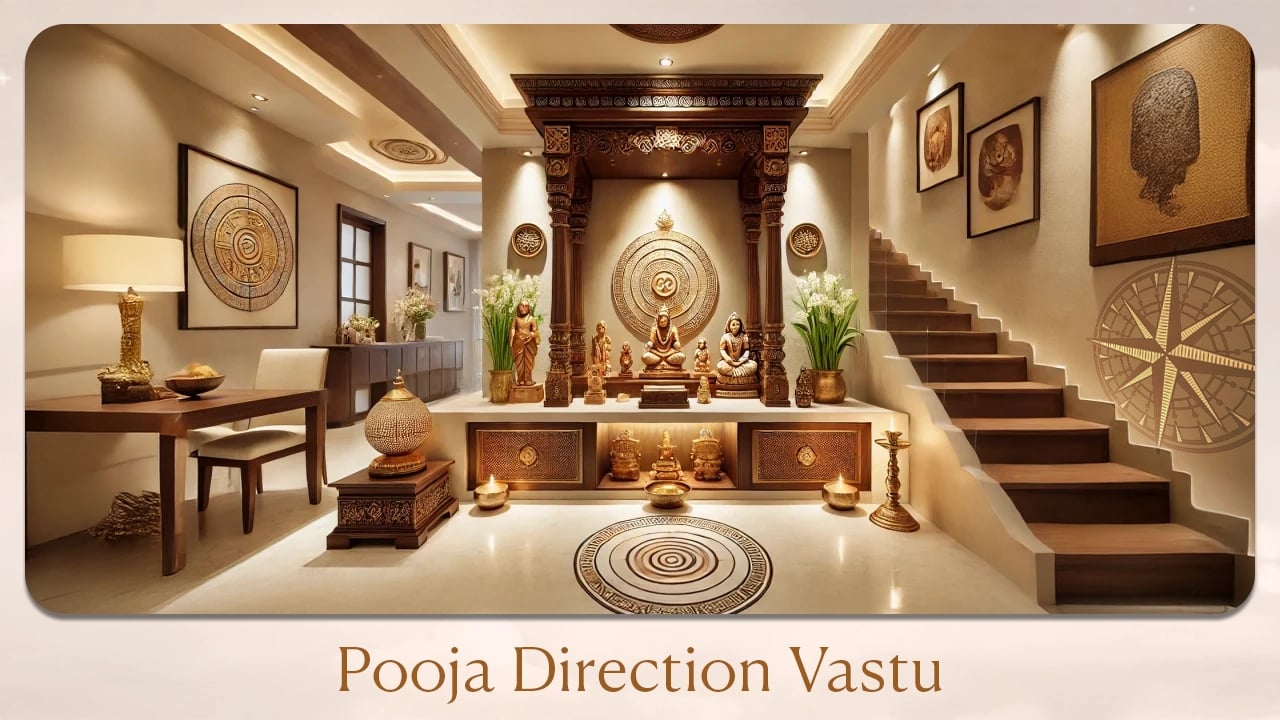
Introduction to Pooja direction Vastu
Are you looking to infuse your home with positive energy and spiritual harmony? The secret might just lie in the direction of your pooja room! Welcome to the world of Pooja Direction Vastu, an ancient science that guides us in creating sacred spaces that radiate peace, prosperity, and positivity. In this article, we’ll unravel the mysteries of Vastu Shastra, focusing on the powerful impact of pooja room direction and design. Ready to energize your home? Let’s dive in!
Read Also: Understanding Angel Number 0808: Meaning, Abundance Spiritual Guidance

What is Pooja Direction Vastu?
Pooja Direction Vastu refers to the set of guidelines in Vastu Shastra that dictate the ideal placement and orientation of the pooja room or altar in your home. It’s all about channeling cosmic energies to create a harmonious environment for prayer and meditation.
Importance of Vastu in Indian Homes
Vastu Shastra isn’t just a tradition—it’s a way of life for millions. In Indian culture, the pooja room is the spiritual heart of the home. Following Vastu ensures that this sacred space attracts positive vibrations, fostering peace, health, and prosperity for the entire family.
Understanding Vastu Shastra
Brief History of Vastu Shastra
Vastu Shastra, often called the “science of architecture,” dates back thousands of years. Ancient sages developed these principles to align human dwellings with the natural elements and cosmic forces, ensuring a balanced and prosperous life.
Core Principles of Vastu
At its core, Vastu is about balance—between the five elements (earth, water, fire, air, and space) and the eight cardinal directions. Each direction is associated with specific energies, and Vastu helps us harness these for our benefit.
Read Also: Vargottama Planet and your Potential in Life
Why Pooja Room Direction Matters
Spiritual Significance
The direction of your pooja room isn’t just a matter of tradition. It’s believed that certain directions amplify spiritual energy, making your prayers more effective and your mind more peaceful.
Scientific Perspective
Even from a scientific standpoint, the orientation of a room can affect light, ventilation, and overall ambiance. A well-placed pooja room can become a tranquil retreat, free from distractions and negativity.
Ideal Directions for Pooja Room
North-East: The Most Auspicious
Ask any Vastu expert, and they’ll tell you—the North-East (Ishanya) corner is the gold standard for pooja rooms. This direction is associated with divine energy and is said to be the abode of the gods.
Other Suitable Directions
If the North-East isn’t feasible, the East and North directions are also considered auspicious. These directions invite the morning sun, symbolizing new beginnings and spiritual awakening.
Directions to Avoid
Steer clear of the South, South-West, and under-staircase areas for your pooja room. These zones are believed to attract negative energies and can disrupt the sanctity of your prayers.
Read Also: Unlocking the Secrets of Mulank Numbers for Perfect Compatibility
Pooja Room Placement in Different Home Types
Apartments
Limited space? No worries! Even in apartments, you can carve out a sacred nook in the North-East or East corner of your living room or kitchen.
Independent Houses
With more flexibility, you can dedicate an entire room in the North-East section. Ensure it’s away from bathrooms and bedrooms for maximum positivity.
Small Spaces
If you’re short on space, a wall-mounted mandir in the right direction works wonders. The key is intention and alignment, not size.
Designing the Pooja Room as per Vastu
Room Shape and Size
A square or rectangular pooja room is ideal. Odd shapes or cramped corners can disrupt energy flow, so keep it simple and symmetrical.
Flooring and Ceiling
Opt for clean, uncluttered flooring—marble or wood is preferred. The ceiling should be higher than the rest of the house if possible, symbolizing spiritual elevation.
Pooja Room Entrance and Door Placement
Ideal Door Position
The entrance should face North or East, inviting positive energy. Avoid placing the door directly opposite the main entrance of the house.
Door Material and Design
Wooden doors with subtle carvings are best. Glass doors are a no-go, as they lack the grounding energy needed for a sacred space.
Pooja Room Interiors
Wall Colors
Go for light, soothing shades like white, cream, or pale yellow. These colors reflect purity and calmness, setting the right mood for prayer.
Lighting
Natural light is ideal, but if that’s not possible, use soft, warm artificial lighting. Avoid harsh, glaring bulbs that can disturb the peaceful vibe.
Storage Solutions
Keep storage minimal and organized. Use closed cabinets for pooja items to avoid clutter, which can block positive energy.
Placement of Idols and Photos
Height and Position
Place idols and photos at eye level, facing East or West. Never place them directly on the floor—use a raised platform or altar.
Number of Idols
Less is more! Avoid overcrowding the altar. Stick to a few deities and keep the arrangement neat and respectful.
Read Also: Consult With The Best Astrologer in Durgapur
Pooja Room Essentials
Mandir or Altar
A wooden or marble mandir is ideal. Ensure it’s clean, well-maintained, and free from cracks or damage.
Lamps and Diyas
Light a lamp or diya daily to dispel darkness and negativity. Place it on the right side of the altar for best results.
Bell and Conch
Ringing a bell or blowing a conch during prayers is believed to purify the space and invite divine blessings.
Daily Rituals and Maintenance
Cleaning and Purification
A clean pooja room is a happy pooja room! Sweep and dust daily, and use incense or camphor to purify the air.
Fresh Flowers and Offerings
Offer fresh flowers, fruits, and water to the deities. Replace offerings daily to maintain freshness and positivity.
Common Vastu Mistakes in Pooja Room
What to Avoid
- Placing the pooja room next to a bathroom or under a staircase
- Using dark or garish colors
- Storing unnecessary items in the pooja room
Remedies for Existing Issues
If you can’t move your pooja room, use Vastu remedies like placing a Vastu pyramid or crystal in the space to neutralize negative energies.
Vastu Tips for Enhancing Positive Energy
Use of Crystals and Yantras
Crystals like quartz and yantras (sacred geometric diagrams) can amplify the energy of your pooja room. Place them on the altar for added benefits.
Incorporating Natural Elements
Bring in elements like water (in a small bowl), fresh flowers, and sandalwood to create a balanced, vibrant atmosphere.
Modern Pooja Room Vastu
Adapting Vastu in Contemporary Homes
Even in modern apartments, you can follow Vastu by using portable mandirs, wall-mounted shelves, and clever lighting.
Space-Saving Ideas
Try foldable doors, compact altars, or even a dedicated pooja cabinet that blends seamlessly with your décor.
Conclusion to Pooja direction Vastu
Creating a powerful pooja room isn’t just about following rules—it’s about crafting a space that resonates with your spirit and uplifts your home. By aligning your pooja room with Vastu principles, you invite peace, prosperity, and positivity into your life. Remember, it’s not the size or grandeur that matters, but the intention and energy you bring to your sacred space. So, why wait? Energize your home with the magic of Pooja Direction Vastu today!
FAQs Pooja direction Vastu
Q1.What is the best direction for a pooja room as per Vastu?
Ans: The North-East (Ishanya) corner is considered the most auspicious for a pooja room, followed by East and North directions.
Q2.Can I have a pooja room in my bedroom?
Ans: It’s best to avoid placing the pooja room in the bedroom. If unavoidable, ensure it’s in the North-East corner and separated by a curtain or partition.
Q3.How many idols should I keep in my pooja room?
Ans: Keep the number of idols minimal—ideally one main deity and a few others. Overcrowding the altar can disrupt the flow of positive energy.
Q4.What colors are suitable for a pooja room?
Ans: Light, soothing colors like white, cream, or pale yellow are ideal. Avoid dark or flashy shades.
Q5.What should I do if my pooja room is not in the ideal direction?
Ans: If relocation isn’t possible, use Vastu remedies like placing a Vastu pyramid, crystals, or yantras to balance the energies in the space.
For interesting astrology-related videos, subscribe to us on YouTube