Thrilling Ways to Know More: Ultimate Uranus Awakening
Surging Uranus awakening energy is here! Learn how to energize your life, embrace change, and experience a thrilling transformation.

Written by By Hanish Bagga
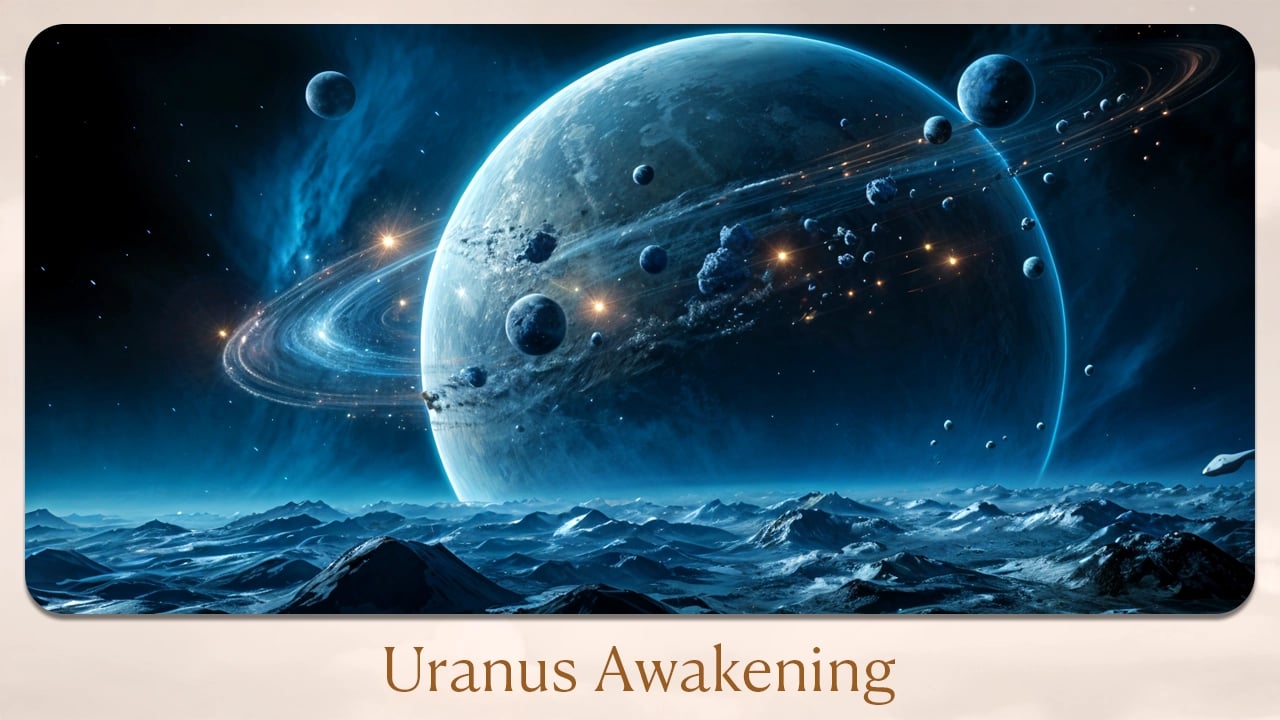
Introduction to Uranus Awakening
Have you ever gazed up at the night sky and wondered about the mysterious worlds spinning far beyond our reach? Among the planets, Uranus stands out as a true enigma—a planet that’s both fascinating and misunderstood. If you’re ready for an ultimate Uranus awakening, buckle up! We’re about to embark on a thrilling journey to uncover the secrets, science, and sheer wonder of this icy giant.
Read Also: Understanding Angel Number 0808: Meaning, Abundance Spiritual Guidance
What Makes Uranus So Unique?
A Quick Overview of Uranus
Uranus is the seventh planet from the Sun, sitting quietly between Saturn and Neptune. It’s classified as an “ice giant,” a term that hints at its chilly, mysterious nature. With a diameter four times that of Earth and a mass 14.5 times greater, Uranus is a true heavyweight in our solar system—perfectly embodying the energy of a Uranus awakening, which often brings sudden shifts and revelations.
The Tilted Planet: Why Uranus Spins Differently
Here’s where things get wild: Uranus is tipped over on its side! Unlike any other planet, its axis is tilted by a whopping 98 degrees. Imagine rolling a ball across the floor instead of spinning it like a top—that’s Uranus for you. Scientists believe a massive collision early in its history knocked it over, symbolizing the kind of upheaval associated with a Uranus awakening—unexpected, radical, and transformational.
Understanding Uranus means understanding the power of disruption, innovation, and rebellion. A true Uranus awakening invites you to break free from convention and embrace your most authentic, unconventional path.

The Discovery of Uranus: A Historical Perspective
William Herschel’s Accidental Find
Back in 1781, astronomer William Herschel was scanning the skies with his homemade telescope. He wasn’t looking for a new planet—he thought he’d found a comet! But after some careful observation, it became clear: this was a new world, the first planet discovered with a telescope.
Naming the Seventh Planet
Naming a planet isn’t as easy as it sounds. After some debate, astronomers settled on “Uranus,” after the ancient Greek god of the sky. It was a fitting tribute to a planet that had expanded our view of the cosmos.
Physical Characteristics of Uranus
Size and Structure
Uranus is a giant, but it’s not just a big ball of gas. Its core is likely rocky, surrounded by a thick mantle of water, ammonia, and methane ices. Above that, a hydrogen and helium atmosphere gives it a ghostly appearance.
Atmosphere and Weather
Don’t let its calm look fool you—Uranus has some of the wildest weather in the solar system. Winds can whip across its surface at speeds up to 560 miles per hour! Its atmosphere is mostly hydrogen and helium, with a dash of methane that gives it a unique color.
The Mysterious Blue-Green Color
Ever wonder why Uranus looks blue-green? It’s all thanks to methane in its upper atmosphere, which absorbs red light and reflects blue and green. It’s like the planet is wearing a permanent pair of cool sunglasses.
Read Also: Best Astrologer in Ahmedabad
Uranus’s Rings and Moons
The Discovery of Uranus’s Rings
Saturn isn’t the only planet with rings! Uranus has 13 known rings, discovered in 1977. They’re dark, narrow, and made mostly of large chunks of ice and rock. These rings are much fainter than Saturn’s, but they add to Uranus’s mysterious charm.
Major Moons: Titania, Oberon, and More
Uranus boasts 27 known moons, each named after characters from Shakespeare and Alexander Pope. The largest, Titania and Oberon, are icy worlds with their own secrets. Some moons may even have subsurface oceans—imagine what could be hiding beneath!
Uranus’s Orbit and Rotation
The Long, Eccentric Orbit
Uranus takes 84 Earth years to complete one trip around the Sun. That means if you were born on Uranus, you’d have to wait a lifetime to celebrate your first birthday!
Extreme Seasons on Uranus
Because of its extreme tilt, Uranus experiences the most dramatic seasons in the solar system. Each pole gets 42 years of sunlight, followed by 42 years of darkness. Talk about a long winter!
Exploring Uranus: Past, Present, and Future Missions
Voyager 2’s Flyby
So far, only one spacecraft has visited Uranus: NASA’s Voyager 2, which flew by in 1986. It sent back stunning images and data, revealing rings, moons, and a magnetic field that left scientists scratching their heads.
Upcoming Missions and Hopes
There’s a growing buzz in the space community about returning to Uranus. Proposed missions aim to send orbiters and probes to study its atmosphere, rings, and moons up close. The next decade could bring a new era of Uranus exploration!
Why Uranus Matters in the Solar System
Comparing Uranus to Other Gas Giants
Uranus is often overshadowed by Jupiter and Saturn, but it’s just as important. Unlike its bigger siblings, Uranus is an “ice giant,” with a different composition and history. Studying it helps us understand how planets form and evolve.
Uranus’s Role in Solar System Formation
Some scientists think Uranus and Neptune may have swapped places early in the solar system’s history. Its odd tilt and unique orbit offer clues about the chaotic past of our cosmic neighborhood.
Fun Facts and Mind-Blowing Mysteries
Coldest Planet in the Solar System
Despite being closer to the Sun than Neptune, Uranus holds the record for the coldest atmosphere—down to a bone-chilling -371°F (-224°C). Why? Scientists are still trying to figure it out!
Magnetic Field Oddities
Uranus’s magnetic field is tilted and off-center, unlike any other planet. It’s as if someone stuck a magnet in at a weird angle. This creates bizarre auroras and magnetic storms.
How to Observe Uranus from Earth
Best Times and Tools for Viewing
Uranus is just barely visible to the naked eye under dark skies, but a small telescope or good binoculars will reveal its tiny blue-green disk. The best time to spot it is during opposition, when it’s closest to Earth.
Tips for Amateur Astronomers
Want to impress your friends? Find Uranus using a star chart or astronomy app. Look for it in the constellation Aries or Pisces, depending on the time of year. Patience and a steady hand are key!
Uranus in Popular Culture
Movies, Books, and TV Shows
Uranus has made cameo appearances in science fiction, from classic novels to modern movies. Its mysterious nature makes it a favorite setting for alien worlds and cosmic adventures.
Uranus Jokes: Why the Name Sticks
Let’s be honest—Uranus’s name has inspired more than a few giggles. But behind the jokes is a planet that’s anything but a punchline. It’s a world of wonder, waiting to be explored.
The Science of Uranus: What We Still Don’t Know
Unanswered Questions
Despite decades of study, Uranus keeps its secrets close. Why is it so cold? What’s beneath its clouds? Are there hidden oceans on its moons? The mysteries are endless.
The Search for Life
Could life exist on Uranus or its moons? While the planet itself is inhospitable, some moons may have the right conditions for microbial life. Future missions may hold the answers.
Uranus and Astrology: Myth vs. Reality
Astrological Significance
In astrology, Uranus is the planet of innovation, rebellion, and sudden change. It’s said to shake things up and inspire new ideas. Whether you believe in astrology or not, it’s fun to see how the planet’s reputation matches its wild nature.
Separating Fact from Fiction
Remember, astrology and astronomy are two different things. While Uranus may influence your horoscope, its real impact is in the science it inspires.
How You Can Get Involved: Citizen Science and Uranus
Online Projects and Resources
You don’t need a PhD to study Uranus! Join online projects like Zooniverse, where you can help analyze data from space missions. There are also tons of resources for learning more, from NASA’s website to YouTube documentaries.
Joining the Uranus Enthusiast Community
Connect with fellow space fans on forums, social media, and local astronomy clubs. Share your observations, ask questions, and stay up-to-date on the latest discoveries.
Conclusion of Uranus Awakening
Uranus is more than just a distant blue-green dot in the sky. It’s a world of extremes, mysteries, and untapped potential. Whether you’re a seasoned astronomer or a curious stargazer, there’s always something new to learn about this tilted giant. So next time you look up at the night sky, remember: the ultimate Uranus awakening is just beginning. The thrill of discovery is out there—are you ready to chase it?
Read Also: Vargottama Planet and your Potential in Life
FAQs of Uranus Awakening
Q1:Why is Uranus tilted on its side?
Ans: Scientists believe a massive collision with another celestial body early in its history knocked Uranus over, giving it a unique 98-degree tilt.
Q2:Can I see Uranus with the naked eye?
Ans: Yes, but only under very dark skies and with excellent eyesight. A small telescope or binoculars makes it much easier to spot.
Q3:What makes Uranus different from Jupiter and Saturn?
Ans: Uranus is an “ice giant,” with a higher proportion of water, ammonia, and methane ices, while Jupiter and Saturn are mostly hydrogen and helium.
Q4:Has any spacecraft landed on Uranus?
Ans: No spacecraft has landed on Uranus. The only visit was a flyby by Voyager 2 in 1986.
Q5:Could there be life on Uranus or its moons?
Ans: While Uranus itself is too hostile for life as we know it, some of its moons may have subsurface oceans that could potentially harbor microbial life.
For interesting astrology-related videos, subscribe to us on YouTube