Rudrabhishek Puja Procedure Step by Step
Rudrabhishek Puja is one of the most sacred and powerful Vedic rituals dedicated to Lord Shiva, the destructive and transformative aspect of the Supreme Trinity.

Written by By Hanish Bagga
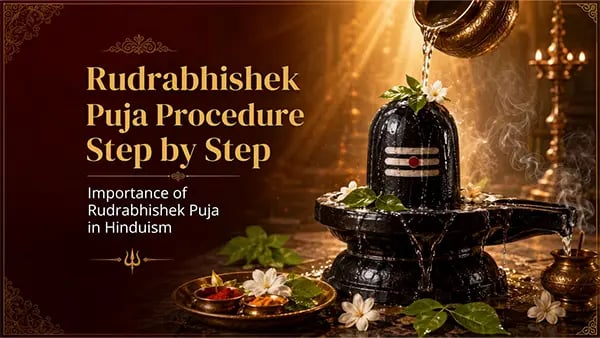
Rudrabhishek Puja is one of the most sacred and powerful Vedic rituals dedicated to Lord Shiva, the destructive and transformative aspect of the Supreme Trinity. Derived from the ancient Sri Rudram chant found in the Yajurveda, this sacred ritual involves bathing the Shiva Lingam with various holy liquids while chanting powerful mantras. Performing or participating in a Rudrabhishek Puja is believed to wash away karmic impurities, alleviate planetary afflictions, fulfill righteous desires, and bring profound mental peace. Whether performed at home, in a temple, or arranged as a dedicated ritual, understanding the step-by-step procedure ensures that devotees can participate with utmost devotion, purity, and spiritual alignment.
Spiritual Significance and Essential Preparations
Before initiating the sacred ritual, understanding its deeper spiritual meaning and organizing the essential samagri (puja materials) establishes the proper reverence and energetic foundation required for divine grace.
Significance of the Rudrabhishek Ritual
The term Rudra refers to the fiercest yet most benevolent form of Lord Shiva, while Abhishek signifies the ritualistic pouring of sacred offerings over the deity. According to ancient scriptures, Lord Shiva resides in the Shiva Lingam in a formless, eternal state. Offering holy liquid substances such as gangajal, milk, curd, honey, ghee, sugarcane juice, and coconut water cools the fierce energy of Rudra and pleases Him immensely. Devotees who perform this puja experience liberation from fear, protection against negative energies, and enhanced spiritual awakening.
Required Samagri and Sacred Space Preparation
Preparing the sacred space begins early in the morning with physical cleanliness and inner purity. Devotees should take a bath, wear clean traditional attire, and clean the altar or puja area thoroughly. Essential ingredients for the ritual include a Shiva Lingam (made of brass, stone, or Panchdhatu), a large brass tray (Abhishek Patra), Gangajal, unpasteurized cow milk, fresh curd, pure desi ghee, organic honey, powdered sugar, sugarcane juice, coconut water, fresh Bilva leaves (Belpatra), Dhatura flowers, white flowers, sandalwood paste, Akshat (unbroken rice), incense sticks, a ghee lamp, and fresh fruits for Prasad.
Read Related Blog: How to Book Rudrabhishek Puja Online with Experienced Pandits
Step-by-Step Procedure for Rudrabhishek Puja
Following the authentic Vedic steps guarantees that the ritual unfolds smoothly, invoking positive cosmic vibrations into the home and consciousness of the practitioner.
1. Sankalp and Ganesh Smaran
Every traditional Vedic ritual begins with Sankalp, a formal vow taken by the devotee before the Almighty. Hold clean water, unbroken rice grains, and fresh flowers in your right palm while stating your full name, location, lunar date (Tithi), and specific spiritual or material intentions. Offer these items at the feet of Lord Shiva or on a copper plate. Following Sankalp, invoke Lord Ganesha, the remover of obstacles, by chanting "Om Gam Ganapataye Namah" and offering flowers and Akshat to ensure the ritual proceeds without impediment.
2. Avahan and Sthapana
The second stage involves inviting Lord Shiva into the Shiva Lingam through Avahan mantras. Place the Shiva Lingam inside a deep brass or copper dish designed to catch the liquid offerings. Gently apply fresh Chandan (sandalwood paste) and offer a few unbroken rice grains while reciting the Moola Mantra or "Om Namah Shivaya." Meditate upon the calm, meditative form of Lord Shiva, recognizing His omnipresence throughout the universe.
3. Panchamrit and Special Dravya Abhishek
The core of the ritual is the continuous pouring of sacred dravyas (liquids) over the Shiva Lingam while chanting the Sri Rudram, Rudra Ashtakam, or the Maha Mrityunjaya Mantra. Begin with pure Gangajal or clean water, followed sequentially by cow milk (for purity and long life), curd (for prosperity), ghee (for physical vitality), honey (for sweet speech and internal harmony), and sugar (for joy). After pouring the individual Panchamrit dravyas, offer specialized liquids such as sugarcane juice (for removal of poverty) or coconut water (for overall fulfillment). Between each offering, rinse the Lingam with pure Gangajal.
4. Shringhar and Sacred Offerings
Once the Abhishek is complete, dry the Shiva Lingam gently with a clean cloth. Apply fresh sandalwood paste and offer a sacred thread (Yajnopavita). Adorn the Lingam with fresh Bilva leaves—ensuring they are intact and presented with three trifoliate leaves facing down—along with Dhatura flowers, crown flowers (Aak), and fresh white garlands. Apply Bhasma (sacred ash), which symbolizes the impermanence of the physical world and supreme spiritual detachment.
5. Aarti and Pushpanjali
Conclude the main ritual by lighting a camphor or multi-wick ghee lamp and performing the Shiva Aarti while ringing a brass bell. Offer Pushpanjali (a handful of fresh white flowers and unbroken rice) at the base of the Lingam while expressing humble gratitude. Offer fresh fruits, sweets, and betel leaves as Naivedya, which is subsequently distributed among family members and attendees as blessed Prasad.
Harmonizing Rudrabhishek with Vedic Astrology and Life Balance
Vedic astrology deeply connects planetary alignments with spiritual remedies. Performing Rudrabhishek Puja acts as a universal astrological remedy that mitigates severe planetary afflictions and aligns cosmic vibrations.
Planetary Afflictions and Astrological Benefits
Lord Shiva governs all nine planets (Navagrahas) and holds ultimate command over time and karmic cycles. Individuals suffering from Saturn's Sade Sati, Rahu-Ketu afflictions, or severe Kaal Sarp Dosh derive immense relief from regular Rudrabhishek. For those experiencing physical ailments caused by unfavorable planetary transits, combining spiritual rituals with insights from health astrology creates a powerful path toward holistic healing and physical vitality.
Empowering Personal Numerology and Planetary Strengths
Astrological alignment extends into numerological combinations and specific planetary dignity. Devotees blessed with the best mulank and bhagyank combination often discover that performing Rudrabhishek accelerates their personal success and spiritual growth. Furthermore, individuals with beneficial planetary placements, such as a strong or vargottama venus, can perform this ritual using sugarcane juice or milk to amplify material luxury, creative talents, and harmonious relationships.
Convenience Through Modern Spiritual Services
In modern times, busy schedules or geographical constraints may prevent devotees from gathering all required samagri or hosting learned priests at home. Utilizing a verified service for an online puja allows individuals to participate in authentic Vedic rituals remotely. Arranging a dedicated rudrabhishek puja online ensures that qualified Vedic pundits conduct the sacred ritual on your behalf with complete adherence to scriptural guidelines, delivering divine blessings directly to your doorstep.
Frequently Asked Questions (FAQs)
What is the best time and day to perform Rudrabhishek Puja?
Mondays (Somvar), Pradosham days, Shivratri, and the entire holy month of Sawan are considered exceptionally auspicious for performing Rudrabhishek. However, performing the ritual during the morning hours (Brahma Muhurta) on any day with pure devotion yields profound spiritual benefits.
Can I perform Rudrabhishek Puja at home without a priest?
Yes, you can perform a simplified version of Rudrabhishek at home. By maintaining physical cleanliness, offering Panchamrit, Bilva leaves, and water to a Shiva Lingam while chanting "Om Namah Shivaya" or the Maha Mrityunjaya Mantra, you can invoke Lord Shiva's divine blessings.
How does an online puja ensure the same spiritual effectiveness?
An online puja is performed by authentic Vedic priests who recite your specific name, gotra, and sankalp prior to starting the ritual. Because spiritual intent (Sankalp) and Vedic sound vibrations transcend physical distance, participating virtually carries genuine spiritual efficacy.
How does performing rudrabhishek puja online support health astrology remedies?
In health astrology, planetary afflictions to the Moon, Sun, or Lagna lord can manifest as chronic physical or mental strain. Booking a rudrabhishek puja online specifically addresses these planetary imbalances through Vedic mantra chanting and holy offerings, fostering holistic vitality.
What is the significance of Bilva leaves (Belpatra) in the ritual?
Bilva leaves represent the three eyes of Lord Shiva and the three Gunas (Sattva, Rajas, and Tamas). Offering fresh, unblemished trifoliate Belpatra cools Lord Shiva and symbolizes the surrender of one's ego and karmic burdens at His divine feet.
How does a vargottama venus influence the offerings used in Rudrabhishek?
A vargottama venus indicates powerful, refined Venusian energy in a birth chart. When performing Rudrabhishek, offering pure cow milk, curd, or white lotus flowers honors this planetary strength, enhancing relationship harmony, aesthetic refinement, and material abundance.