Rudrabhishek Puja in Sawan 2026: Benefits & Ritual Guide
Discover the spiritual significance of Rudrabhishek Puja in Sawan, its benefits, rituals, astrological remedies, and how to book an online puja.

Written by By Hanish Bagga
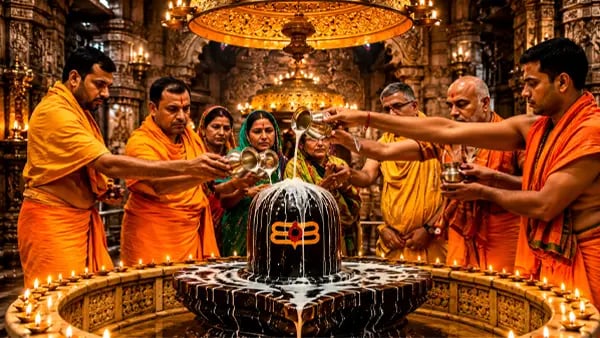
The monsoon winds of the holy month of Shravan (popularly known as Sawan) carry a distinct earthy aroma, a gentle drop in temperature, and an unmistakable spiritual electricity. For devotees of Lord Shiva, this is the most anticipated time of the year. The entire cosmos seems to echo with the rhythmic chants of "Om Namah Shivaya" as nature itself bathes the earth in cool rain, mirroring the ancient, sacred ritual of Rudrabhishek.
Rudrabhishek Puja is not merely a ritual; it is a profound cosmic technology. It is an act of pouring love, devotion, and sacred liquids over the Shiva Lingam to invoke the benevolent, transformative energy of Lord Rudra—the fierce yet deeply compassionate form of Lord Shiva. When performed during the auspicious month of Sawan, its spiritual and material benefits are magnified a thousandfold.
The image above captures the stillness and profound energy of a prepared Shiva Lingam. The copper serpent coiled around the deity represents the Kundalini energy awakened, while the colorful floral offerings reflect the devotion of the seeker. Performing this ritual in Sawan is a gateway to deep inner peace and cosmic alignment.
The Sacred Essence of Rudrabhishek Puja in Sawan
To understand why Rudrabhishek holds such sway during Sawan, we have to look at both Puranic legends and the subtle energetic shifts of the season. According to Vedic tradition, Shravan is the month when Lord Shiva drank the Halahala (deadly poison) that emerged from the churning of the cosmic ocean (Samudra Manthan).
To cool the intense heat generated by this poison inside Mahadev, the devas (gods) offered holy Ganges water to him. Thus, pouring water, milk, and other cooling substances on the Shiva Lingam became a way to soothe the cosmic creator and express deep gratitude.
When you perform Rudrabhishek, you are re-enacting this cosmic preservation. It is a highly meditative process where the continuous flow of liquids over the Lingam represents the steady flow of our consciousness toward the Divine. The chanting of the Sri Rudram from the Yajurveda during the bath creates powerful sound vibrations that purify the atmosphere, clear blockages in your personal energy field (aura), and dissolve deep-seated karmic residues.
Cosmic Alignments: Astrology and the Power of Sawan
Astrology and spiritual practices are two sides of the same coin. The planetary alignments during the month of Sawan make it an exceptionally potent time to resolve complex astrological charts. When the Sun transits into Cancer and the Moon rules the emotional tide, our subconscious mind becomes highly receptive to spiritual remedies.
For individuals dealing with intense relationship dynamics, specific chart configurations can be deeply pacified by Rudrabhishek. For instance, when an individual has the 7th lord in 1st house, their sense of self-identity is inextricably linked to their relationships and partnerships. This placement can sometimes cause immense relationship anxiety or an over-reliance on others for happiness. Offering honey and milk to Lord Shiva during Sawan brings emotional maturity, balancing the raw intensity of this placement and fostering harmony in partnerships.
Furthermore, if your chart features a venus vargottama—where Venus occupies the same zodiac sign in both the main birth chart (Lagna) and the harmonic Navamsha (D9) chart—your capacity for love, luxury, and artistic expression is highly elevated, but so is your vulnerability to material attachments. Performing Rudrabhishek during Sawan channels this high-vibrational Venusian energy away from addictive behaviors and toward pure, divine devotion (Bhakti), transforming worldly desires into spiritual gold.
On the darker, more transformative side of astrology, having scorpio in 8th house brings sudden upheavals, hidden fears, and intense psychological deaths and rebirths. Because the 8th house is the natural home of Scorpio, this energy is double-strength. The Abhishek of Lord Shiva—the ultimate lord of transformation and destruction of ego—acts as a psychic shield. The sacred ash (Bhasma) and water offered to the Lingam soothe the volatile energies of the 8th house, turning terrifying life crises into opportunities for profound spiritual awakening.
Numerology and Timing: Finding Your Auspicious Day
While every single day of Sawan is holy, choosing the right date aligned with your personal numerology can accelerate your spiritual growth. In Vedic numerology, your root number or Mulank (calculated by adding the digits of your birth date until you get a single number) holds the key to your personal vibration.
Devotees often ask, which mulank is best for performing Rudrabhishek on specific days of Sawan? While Lord Shiva accepts love from all, those with a Mulank of 2, 7, or 9 find a special resonance during this month:
- Mulank 2 (ruled by the Moon): Sawan Mondays (Somvar) are exceptionally powerful for you, as Lord Shiva wears the crescent moon on his head. Performing the puja on these days directly stabilizes your emotional waves.
- Mulank 7 (ruled by Ketu): Ketu is the planet of liberation and deep spirituality. Your inward-looking energy matches perfectly with the meditative vibrations of Rudrabhishek.
- Mulank 9 (ruled by Mars): Performing the Abhishek on a Tuesday (Mangalwar) of Sawan helps cool down the fiery, aggressive tendencies of Mars, turning raw temper into constructive, spiritual willpower.
Even if your Mulank differs, aligning your ritual with the auspicious Pradosh Vrat or Shivratri of the Shravan month guarantees immense blessings.
Step-by-Step Rituals of the Holy Bath
A traditional Rudrabhishek involves bathing the Shiva Lingam with "Panchamrit" (the five nectar-like ingredients) along with other sacred materials. Each substance poured onto the Lingam has a specific symbolic meaning and psychological benefit:
- Ganges Water / Pure Water: Symbolizes the purification of the mind and the washing away of past negative karma.
- Unpasteurized Cow’s Milk: Bestows longevity, good health, and peace of mind.
- Curd (Yogurt): Blesses the devotee with prosperity, stability, and the blessing of children.
- Honey: Sweetens speech, dissolves ego, and brings sweetness to relationships.
- Ghee (Clarified Butter): Ignites the intellect, removes physical ailments, and builds spiritual strength.
- Sugarcane Juice: Symbolizes the removal of poverty and the arrival of joy and abundance into the household.
- Sandalwood Paste: Cools the mind, brings mental clarity, and enhances focus.
As each liquid is poured, the priest chants the verses of the Rudri Path. The combined effect of the visual flow, the aromatic herbs, and the acoustic vibrations of the Sanskrit mantras coaxes the mind into a state of deep meditation (Samadhi), where the boundary between the worshiper and Lord Shiva completely dissolves.
Modern Devotion: The Rise of Online Puja
In our fast-paced, globalized world, physical boundaries can sometimes prevent us from visiting ancient Shiva temples or organizing a grand, traditional ritual at home. Finding authentic priests who can chant the complex Vedic mantras with precise pronunciation has also become a challenge in many parts of the world.
To bridge this gap, the concept of online puja has emerged as a beautiful blessing. Through digital platforms, devotees living anywhere from New York to Sydney can book a personalized Rudrabhishek Puja performed by experienced priests at sacred spots like Varanasi, Haridwar, or Ujjain.
Skeptics might wonder if a virtual ritual holds the same power. In spiritual sciences, Sankalpa (conscious intent) is the driving force. When you participate in a digital puja, the priests take your name, gotra, and birth details, taking a solemn vow on your behalf. As you watch the live stream of the milk and water cascading over the Lingam, your mind aligns with the ritual. The cosmic energy is not bound by physical distance—it travels instantly to where your focus and devotion are anchored.
Spiritual and Material Benefits of the Ritual
The beauty of worshiing Lord Shiva is that he is Ashutosh—one who is easily pleased. He does not demand complex grandeur; he demands pure surrender. Yet, the returns of performing Rudrabhishek during Sawan are multifaceted:
"By pleasing Rudra through the sacred bath, the universe itself is pleased, bringing harmony to the environment, peace to the mind, and liberation to the soul."
- Karmic Cleansing: It is believed that the powerful vibrations of the Rudram chants burn away the deep-seated impressions (Samskaras) of past errors, freeing you from recurring life obstacles.
- Health and Longevity: The herbal and dairy elements offered during the abhishek absorb high-frequency spiritual vibrations. Consuming a drop of this energized Prasad (holy water) is said to have therapeutic healing properties for both physical and mental illnesses.
- Inner Peace: For those suffering from anxiety, depression, or a chaotic home environment, the cooling nature of the ritual brings an immediate sense of calm, grounding, and mental stability.
- Material Prosperity: Offering sugarcane juice and honey removes financial blocks, paving the way for career growth, success in business, and the clearing of debts.
As Sawan arrives, take a moment to step away from the relentless noise of daily life. Cleanse your space, light a simple lamp, offer a few drops of water or milk to Lord Shiva, and let your heart dissolve in the sublime energy of Rudrabhishek.
Frequently Asked Questions
What is the Best Time of Day to Perform Rudrabhishek During Sawan?
While any time during the holy month of Sawan is spiritually vibrant, the early morning hours (Brahma Muhurta, between 4:00 AM and 6:00 AM) or the evening twilight hours (Pradosh Kaal, around sunset) are considered the absolute best times. The ambient energy during these transitions is highly satvik (pure), making it easier to slip into a meditative state.
Can We do Rudrabhishek at home During Sawan?
Absolutely. If you have a small Narmada stone Lingam or a metal Shiva Lingam at home, you can perform a simple Rudrabhishek yourself. Ensure you place the Lingam in a wide copper or brass plate to collect the liquids. Chant "Om Namah Shivaya" or play the Sri Rudram chant in the background as you slowly pour water, milk, and honey. Always dispose of the collected liquids respectfully by watering them to house plants rather than draining them in a sink.
How Does a Venus Vargottama placement Benefit from Shiva Worship?
A Venus Vargottama placement means your desires and aesthetic senses are incredibly powerful and deeply ingrained. However, this can sometimes lead to obsessive attachments or high expectations in love and luxury. Shiva, as the ultimate master of senses and asceticism, provides the perfect grounding energy. Worshiping Him helps refine these Venusian qualities, ensuring your passions lead to creative genius and pure love rather than emotional dependency or disillusionment.
Is it Possible to Get the Same Benefits Through an Online Puja?
Yes. In Vedic rituals, the Sankalpa (the declaration of intent with your name and birth details) is what links your energetic blueprint to the ritual. When a qualified priest chants the mantras on your behalf while you focus on the live stream with deep devotion, the spiritual benefits are fully transmitted. It is your emotional and spiritual alignment that acts as the receiver for the divine energy.
Why is Scorpio in the 8th house Considered a Powerful Time for Rudrabhishek?
The 8th house represents transformation, mysteries, and deep karmic debts, while Scorpio is a sign of intense regeneration. This combination can sometimes cause sudden, turbulent life shifts. Because Lord Shiva is the deity of death, rebirth, and time (Mahakala), performing Rudrabhishek pacifies these volatile changes, helping you navigate life transitions smoothly and converting potential crises into profound spiritual upgrades.