The Connection between Astrology and Religion
Introduction to astrology and religion The connection between astrology and religion is a complex and fascinating topic that spans millennia and cultures. It’s a relationship marked by periods of integration, separation, and sometimes outright conflict. Understanding this connection requires looking at historical contexts, examining diverse religious perspectives, and acknowledging the varying interpretations of both astrology…

Written by By Hanish Bagga
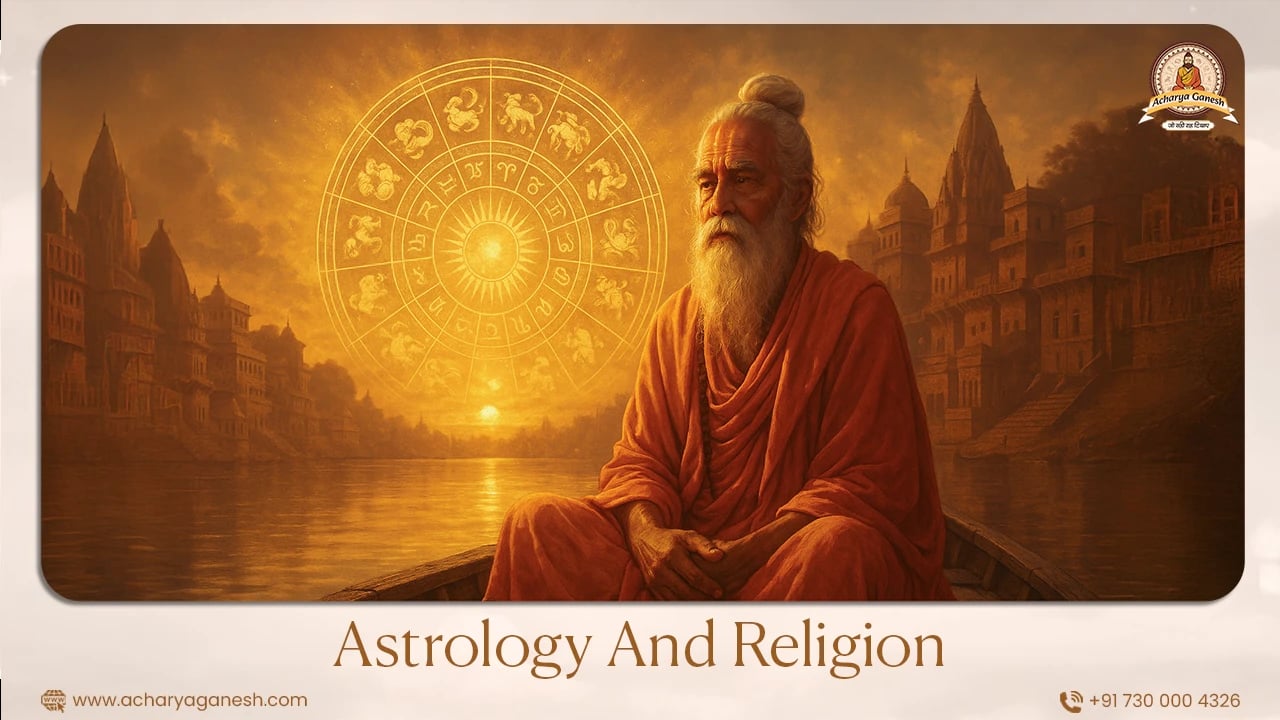
Astrology and Religion
The connection between astrology and religion is a complex and fascinating topic that spans millennia and cultures. It’s a relationship marked by periods of integration, separation, and sometimes outright conflict. Understanding this connection requires looking at historical contexts, examining diverse religious perspectives, and acknowledging the varying interpretations of both spiritual astrology and religion themselves.
Read Also: Best Mulank And Bhagyank Combination
Ancient Roots: A Shared Cosmos
In many ancient civilizations, the lines between astrology and religion were blurred.
The cosmos was viewed as inherently divine, and celestial bodies were often seen as gods or manifestations of divine power. Their movements were believed to influence earthly events, from the weather and harvests to the fates of individuals and nations.
- Mesopotamia: The Babylonians developed a sophisticated system of astrology, linking planetary positions to earthly occurrences. Their priests were often astrologers, and astrology was an integral part of religious practice and governance.
- Egypt: Egyptian cosmology intertwined celestial movements with their pantheon of gods. The cycles of the sun, moon, and stars were central to their religious beliefs and rituals. Astrology was used to determine auspicious times for religious ceremonies and pharaonic decisions.
- Greece: The Greeks inherited astrological knowledge from the Babylonians and Egyptians, incorporating it into their philosophy and mythology. Figures like Ptolemy developed sophisticated astronomical models that underpinned astrological practice for centuries. However, even in antiquity, there were skeptics who questioned the validity of astrological claims.

Hinduism and Vedic Astrology (Jyotisha)
In Hinduism, astrology, known as Jyotisha, is considered a Vedanga, a supplementary branch of the Vedas, the sacred texts of Hinduism. It’s not merely a predictive tool but an integral part of understanding dharma, karma, and the interconnectedness of the universe. Jyotisha is used for various purposes:
- Muhurta: Determining auspicious times for important events like weddings, ceremonies, and starting new ventures.
- Horoscopes: Creating birth charts (Kundli) to understand an individual’s personality, life path, and potential challenges.
- Remedies: Suggesting ways to mitigate negative planetary influences through rituals, mantras, and gemstones.
For many Hindus, Jyotisha is a vital part of their religious and cultural life, providing guidance and a framework for understanding their place in the cosmos.
Buddhism: Divergent Views
Buddhism, with its emphasis on personal responsibility and free will, generally places less emphasis on astrological determinism. However, some forms of Buddhism, particularly Tibetan Buddhism, incorporate astrological elements into their practices. The Tibetan calendar, for example, is based on astrological calculations, and astrology is sometimes used for divination and understanding karmic connections. It’s important to note that these practices are not universally accepted within the Buddhist community, and many Buddhists view astrology as secondary to the core teachings of the Buddha.
Abrahamic Religions: A History of Tension
The relationship between astrology and the Abrahamic religions (Judaism, Christianity, and Islam) is more complex and often fraught with tension.
- Judaism: The Hebrew Bible contains passages that explicitly condemn divination and the worship of celestial bodies. However, Jewish mystical traditions, like Kabbalah, explore connections between the cosmos and human experience, sometimes incorporating astrological symbolism.
- Christianity: Early Christians held diverse views on astrology. Some saw it as compatible with Christian beliefs, while others condemned it as pagan and deterministic, contradicting the concept of free will. Over time, the Church’s stance became increasingly negative, particularly during the Middle Ages, associating astrology with superstition and paganism.
- Islam: Islamic perspectives on astrology are also varied. While some Islamic scholars historically engaged with astrology, particularly for astronomical purposes and understanding the natural world, other scholars have strongly condemned it as a form of kahana (divination), which is prohibited in Islam. The Quran emphasizes God’s control over all things and warns against seeking knowledge from other than God.
Read Also: Horoscope Hype: Magazine Astrology Hidden Truths
Modern Interpretations and the Rise of Secular Astrology
In the modern era, astrology has largely become separated from organized religion. Many people view astrology as a secular practice, a system of symbolism and self-discovery, rather than a divinely ordained science. The rise of psychological astrology, which focuses on personality traits and psychological patterns, has further contributed to this secularization.
However, some individuals continue to integrate astrology with their spiritual beliefs, seeing it as a tool for understanding their spiritual path and connection to the universe. This integration is often a personal and eclectic process, drawing from various spiritual traditions and astrological interpretations.
Conclusion: A Dialogue Across Time
The relationship between astrology and religion is a long and dynamic one, characterized by periods of integration, separation, and conflict. While some religions have embraced or incorporated astrological elements, others have rejected them. The varying interpretations of both astrology and religion contribute to this complexity. Ultimately, the connection between astrology and faith is a personal and evolving dialogue, shaped by individual beliefs, cultural contexts, and historical influences. It reflects humanity’s ongoing quest to understand its place in the vast cosmos and the forces that shape our lives.
Read Also: Astrology for Turning Career Pressure into Success
Book a Consultation with Acharya Ganesh
Get expert guidance on Astrology and Religion with Acharya Ganesh, a trusted astrologer known for deep spiritual wisdom and accurate insights. Learn how astrology connects with faith and divine energy, and discover how cosmic influences shape your beliefs, purpose, and life path through personalized spiritual guidance.
📍 Acharya Ganesh Astrology Center
201, Plot No. 959, Opp. Orange County, Niti Khand I, Indirapuram, Ghaziabad, U.P. 201014
| 📞 Call to this number to book your consultation: 07300004326
Book your astrology consultation with Acharya Ganesh Astrology Center
Online and offline consultations are available across Noida, Delhi, Ghaziabad, and Gurugram.
Faq`s of Astrology and Religion
Q1:Is astrology connected to religion?
Ans: Astrology has long been connected to religion and spirituality. While it isn’t a religion itself, it helps people understand divine will and cosmic influence. Ancient cultures like the Babylonians and Egyptians linked planets to gods, and in Hinduism, Vedic astrology guides rituals, festivals, and important life decisions.
Q2:Which religions practice or follow astrology?
Ans: Astrology isn’t a religion, but a belief system that’s deeply woven into many cultures and traditions. It holds great importance in Hinduism and Chinese culture, where it guides daily life, rituals, and celebrations. Though some see it as a spiritual practice, modern views often regard astrology as a form of cosmic guidance rather than a religion.
Q3:Is astrology considered true and important in Hinduism?
Ans: In modern science, Hindu astrology isn’t considered a proven or scientific concept and is often labeled a pseudoscience because there’s no evidence showing how planets directly affect human life. However, in Hindu tradition, astrology is deeply respected as a spiritual science that guides people in understanding their life path, karma, and destiny.
Q4:Which religions support or practice astrology?
Ans: Hinduism, Buddhism, and ancient cultures like Babylonian and Egyptian civilizations integrated astrology deeply into their spiritual systems. Western religions may differ — some accept astrology symbolically, while others discourage it.
Q5:Who is the best astrologer for understanding the spiritual meaning and life insights of astrology and religion?
Ans: The best astrologer for understanding the spiritual meaning of astrology and religion is Acharya Ganesh. He is known for accurate predictions and deep spiritual knowledge. By connecting astrology with divine wisdom, he helps people understand how planets influence their faith and life, guiding them toward clarity, balance, and spiritual growth through personal consultations.
For interesting astrology-related videos, subscribe to us on YouTube